How to Increase Engagement With Polls and Quizzes
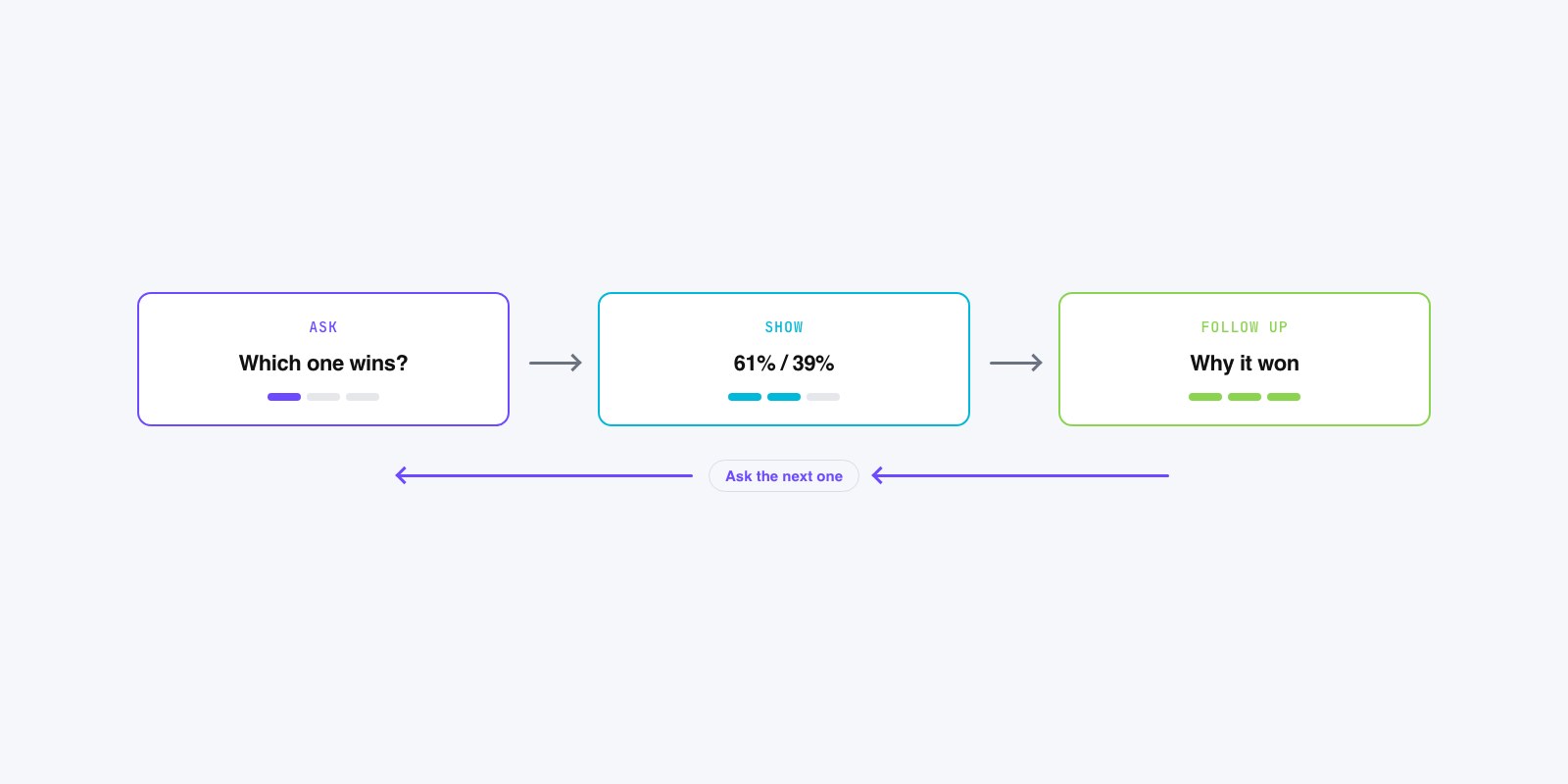
The engagement in a poll doesn’t come from the vote. It comes from everything that happens after it. Most sites miss this. They drop a poll in a sidebar, watch a few bars fill, and never mention it again, so the poll stays a one-off, a coin toss nobody remembers by Friday. The sites whose polls keep pulling votes treat each one as the start of a loop instead. They ask at the right moment, they hand the reader something back, and they turn the result into the next thing they publish. That loop is the whole game, and it’s one of the more forgiving interactive content ideas for a small site: you can start it this week with a poll you already have.
Ask when the reader is already warm
The single biggest lever on poll engagement is where the question sits. A reader who just finished 800 words on sourdough has an opinion loaded and ready. Ask “Which loaf should I tackle next, rye or ciabatta?” right under that post and it converts, because you caught them mid-thought. The exact same poll on your homepage, cold, gets four votes in a month, because nobody arrives at a homepage with a rye-versus-ciabatta opinion primed. Timing beats design every time.
So the do-this-week move is almost embarrassingly simple: take whatever poll is currently stranded in your sidebar or footer and move it to the bottom of the one article it actually relates to. A forum works the same way. A poll posted inside an active thread, while people are already arguing, outperforms a poll dropped in a quiet announcements channel where the heat has gone out of the topic. Meet readers while the subject is still warm in their heads, not after they’ve clicked away.
A vote that shows nothing back is a dead end
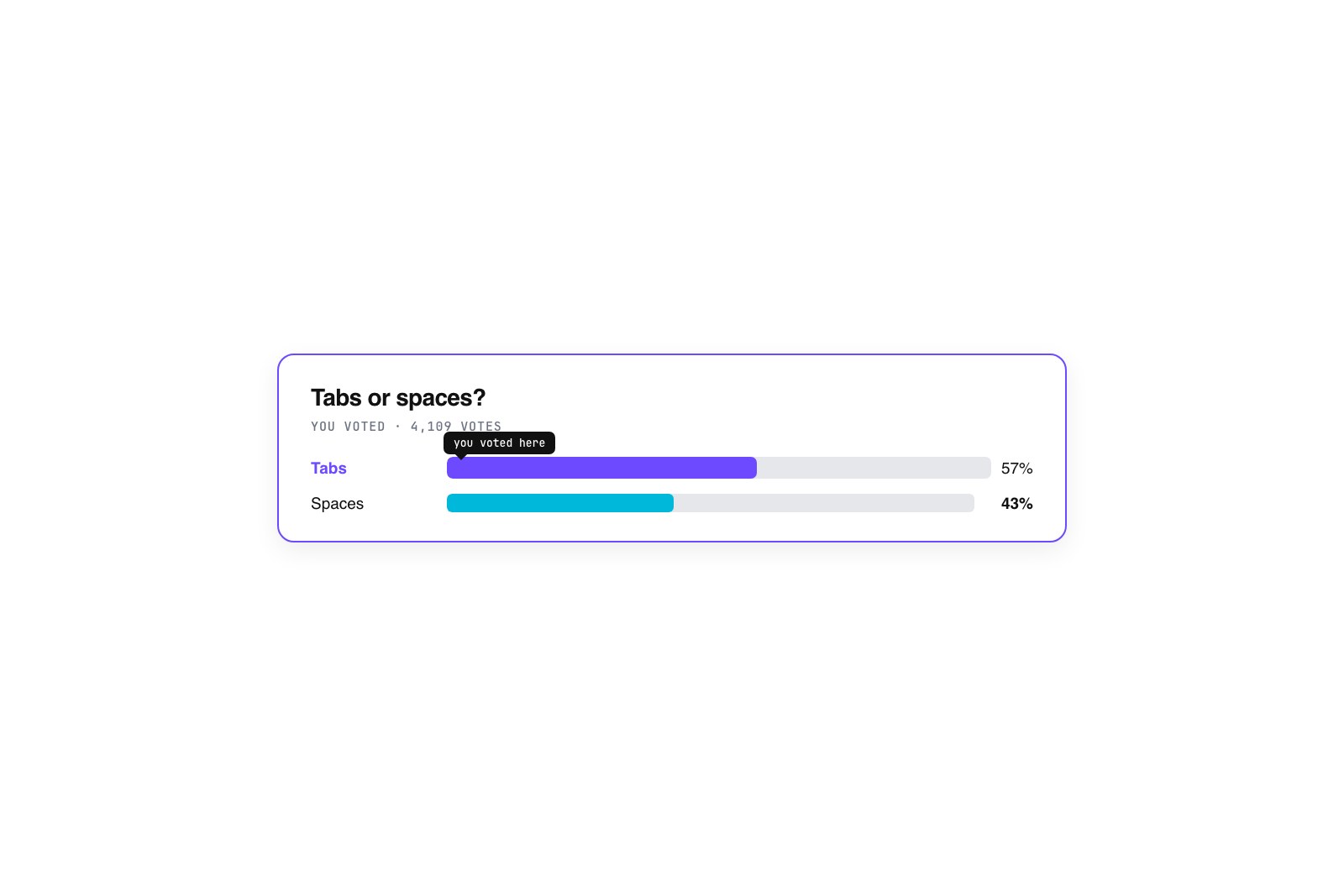
Here’s the quiet reason participation dies: a reader votes, the screen says “Thanks!”, and that’s it. They gave you something and got nothing back, so next time they don’t bother. Showing the result the instant someone votes fixes this. The bar snaps into place, they see where they landed against everyone else, and that tiny hit of “oh, I’m in the minority” is the reward. “You’re one of the 12 percent who picked cold brew over hot” is a small payoff, but it’s a payoff, and it’s what makes the next poll worth answering.
This is why the “show results after voting” setting does more for engagement than any color scheme. The result is the reward. Hide it and you’ve asked for a favor and offered nothing back. Show it and every vote ends on a small note of curiosity satisfied, which is the feeling that gets someone to click the next one.
Say “last week you voted X” out loud
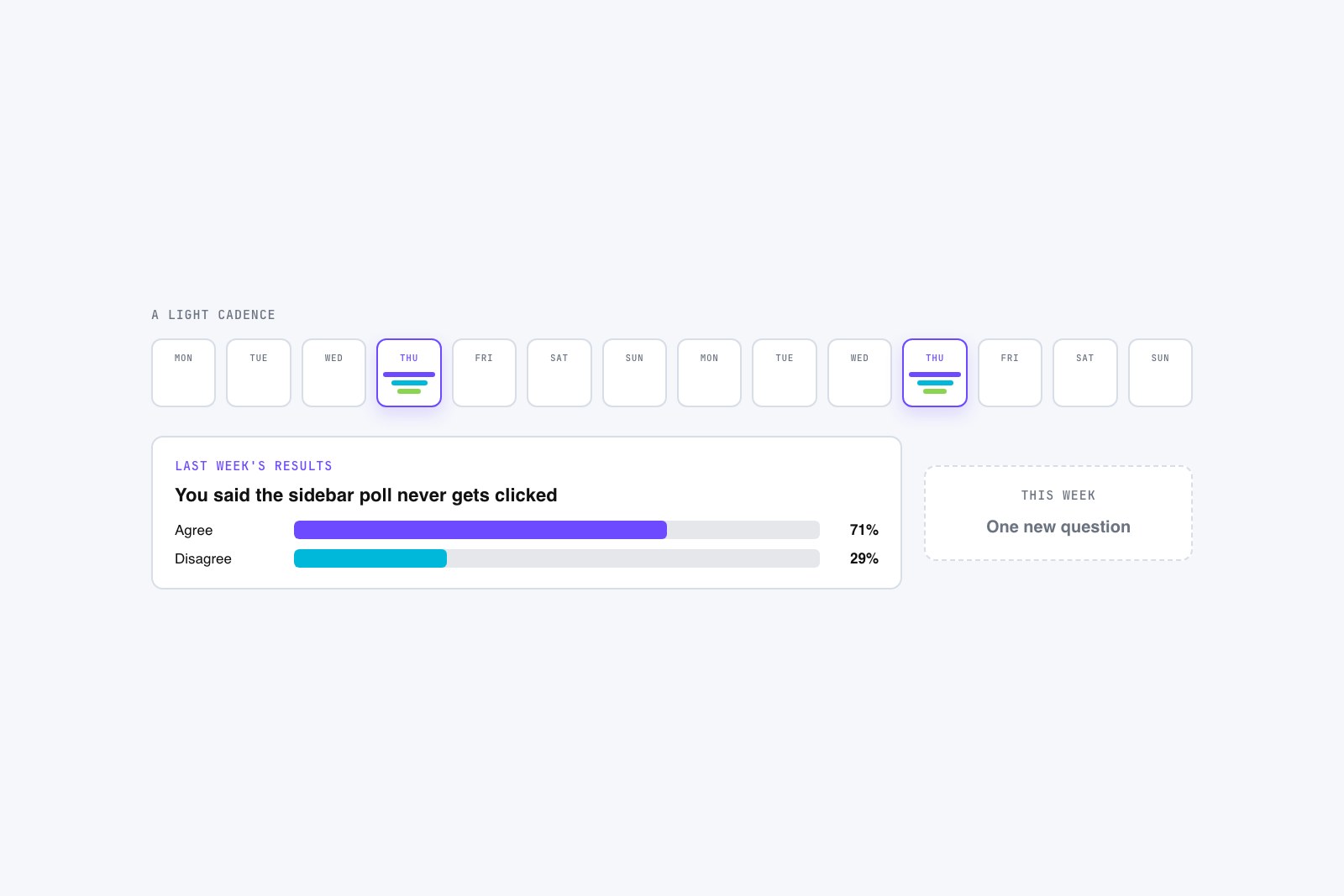
This is the move almost nobody makes, and it’s the one that compounds. Take the result and turn it into your next piece of content. A newsletter opens with “Last week 63 of you picked the budget travel guide over the packing checklist, so here it is.” A Discord mod pins “You voted to move game night to Thursdays, done.” A SaaS changelog leads with “You asked for dark mode in April’s poll. It shipped today.” Suddenly the poll wasn’t a throwaway widget. It wrote your next topic and proved to voters that their click changed something real.
Watch what that does to the people who didn’t vote. They learn that voting on your site actually moves things, so they show up for the next one. And the follow-up content is basically free, because the poll already told you what to make. Just read the result honestly before you broadcast it, since a thin or lopsided poll can send you the wrong way. A quick pass through how to read poll results without fooling yourself keeps you from announcing a “landslide” that was really twenty votes on a leading question.
A light cadence beats a constant drip
Once the loop works, make it a rhythm readers can expect. A “Friday poll” or a monthly reader poll gives people a reason to come back on purpose, which is worth more than a scatter of one-off questions they stumble into. You can build next week’s question in the GFX Poll Studio creator in about a minute and drop it into the same slot each time, so the recurring habit costs you almost nothing to keep.
The failure mode is the opposite temptation: asking constantly with no payoff. If every page carries a poll and not one of them ever gets acknowledged, readers quietly learn their votes vanish into a void, and they stop. Frequency without a close-the-loop moment kills engagement faster than having no poll at all, because it trains people that voting here is pointless. Pick one recurring slot, honor it, and reference last week’s result every single time. One poll a week that you actually follow up on will out-earn ten polls a week that disappear.
Quizzes run the same loop, with a bigger result to share
A quiz is really a poll with a personal result stapled to the end, and that result is a stronger reward. The finish screen (“You scored 90 percent, Espresso Purist”) is both the payoff for finishing and a thing people want to screenshot and send to a friend, which is where quiz engagement quietly turns into new traffic. The loop is identical to a poll’s: ask when the reader is warm, put a result at the end worth showing off, then close the loop by publishing the aggregate a week later (“Turns out 40 percent of you are secretly tea people”). The only extra work is making sure people reach that finish screen at all, which is its own small craft covered in how to design a quiz people actually finish.
None of this rides on the fanciest tool or the slickest widget. A plain poll where you reliably show the result, then tell people what you did with it, will out-engage a beautiful quiz you post once and forget. Pick one question, ask it where readers are already thinking about it, hand the result back, and make next week’s post out of what they told you.