Interactive Content Ideas for Small Websites
“Interactive content” has a marketing-department ring to it, like it needs a developer, a budget line, and a launch date. On a site run by one or two people it needs none of that. The thing readers actually touch most is usually the simplest one on the page: a question they can answer in a second. The trick isn’t picking the fanciest format. It’s picking the format whose payoff is worth what it costs you to build, and for a small site that’s almost always something small.
Start with a poll, because nothing else is this cheap
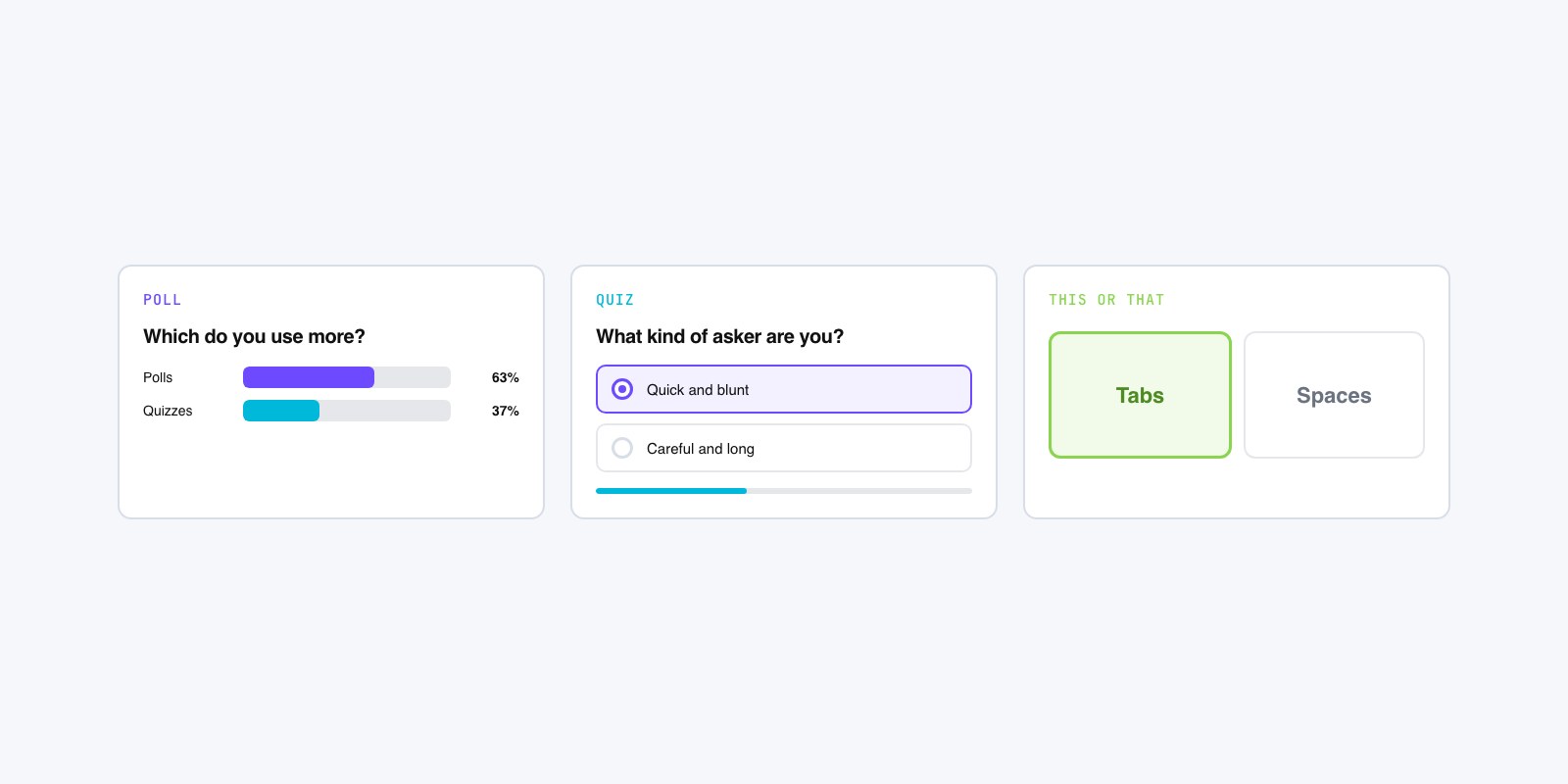
A single poll is the lowest bar to clear. You write one question, add a few answers, and you have something a reader can act on before they’ve even decided whether to stay. You can build one on GFX Poll Studio in under a minute, drop it at the end of a post, and watch votes come in while you do something else.
The payoff scales with how sharp the question is. A recipe blogger who asks “Which of these should I turn into a full recipe next week?” gets a content decision and a reason for readers to come back for the result. A Discord community asking “Which channel should we add?” gets buy-in on the change instead of complaints after it. A SaaS changelog poll, “Which of these should we ship first?”, turns a passive release note into a reader who now has a stake in the roadmap. This is the format that suits everyone, which is exactly why it’s the place to start. If you’ve never built one, the step-by-step in how to create a poll for your website covers picking the type and writing the question so people answer.
Reach for a quiz only when the topic has that shape
A quiz asks more of you and can give more back. You’re writing several questions, deciding how results are scored or sorted, and often building a short outcome for each ending. That’s an afternoon, not a minute. But a quiz that fits its subject earns real time on the page and gets shared in a way a poll rarely does. The two shapes that work are the “which one are you” personality angle and the “how much do you actually know” knowledge angle. A houseplant site’s “What’s killing your fern?” quiz walks a reader to a useful answer and keeps them clicking through it. A study-help site’s “How ready are you for the exam?” quiz does the same for the knowledge angle, and because people want their score, it’s the rare format where asking for an email before the result feels fair rather than pushy.
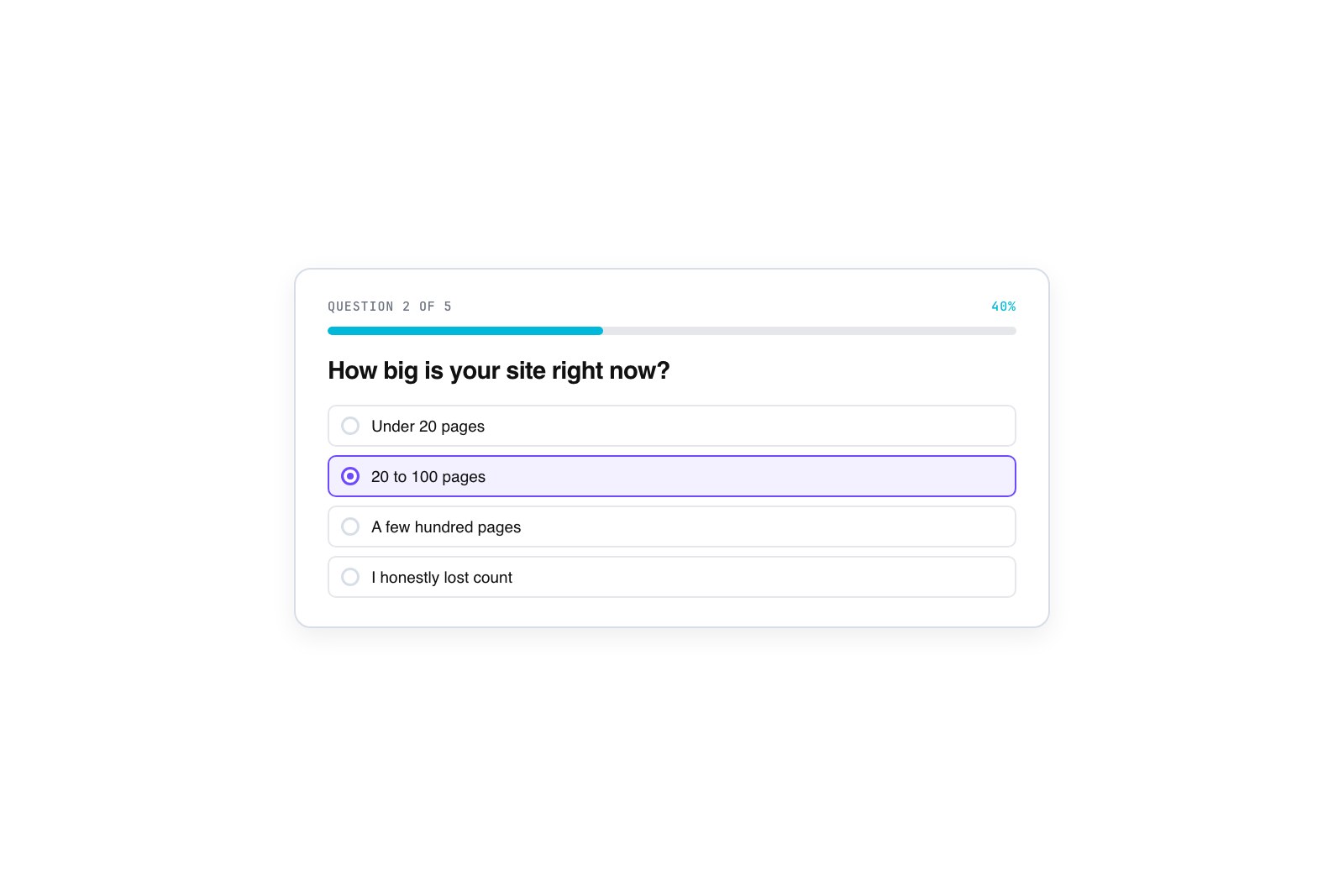
Skip the quiz when the topic has no natural quiz shape, because a forced one is worse than none. If you do build it, the same habits that keep a poll answerable keep a quiz finishable: short questions, honest options, no dead ends. A quiz that strands a reader on question six with no sense of how much is left is a quiz they close, taking your bounce rate up with them. The specifics live in poll design best practices, and they carry straight over to quizzes.
The low-effort middle: this-or-that and reader Q&A
“This or that” is a poll wearing a costume: a run of quick binary picks (“cast iron or nonstick?”, “morning run or evening run?”) that readers rip through because each one takes no thought. It’s really a few polls stacked together, so the build cost is the same as a poll. The payoff is momentum. Someone who answers three keeps going, and by the fourth they’re invested enough to read what comes next. It suits social posts and newsletters especially, where you want a fast yes before you ask for anything bigger.
Reader Q&A costs even less. You open a thread or a short form, ask readers what they want to know, and answer the good ones out loud. A newsletter writer who ends each issue with “reply with your biggest question about container gardening” gets engagement and a stack of article ideas handed over for free. A forum can run the same play with a pinned “ask the regulars anything” thread that quietly becomes the most-read page on the board. This is where the returns start to compound, because the same reader who answers a poll will often ask a question, and the question tells you what to write next. There’s more on stacking those effects in how to increase engagement with polls and quizzes.
Calculators and reader rankings, when they earn their keep
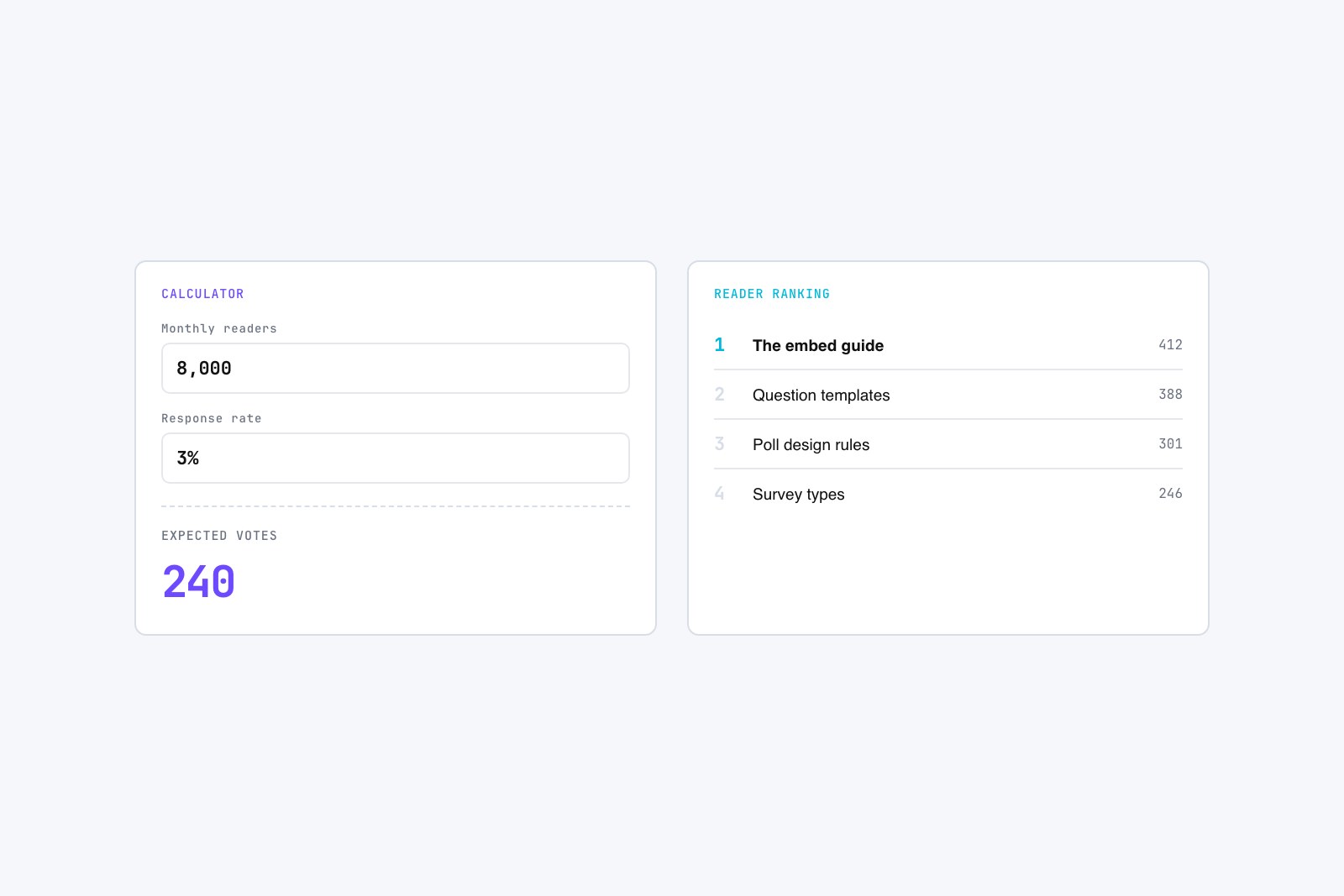
A simple calculator is the one item on this list that can need real code. Something that turns inputs into a number, a cups-to-grams converter, a “how much paint for this room” tool, a rough monthly-cost estimate, tends to need logic and sometimes a plugin or a bit of dev help. It’s the priciest option here by a wide margin. It’s also the stickiest. A calculator that answers a question people type into a search box pulls in traffic and links for years, long after you’ve forgotten you built it. So build one only when there’s a real calculation your readers keep doing by hand, not as a novelty. It suits sites built around a task with numbers in it, home improvement, fitness, personal finance, cooking, where readers are already reaching for their phone’s calculator anyway.
Reader-submitted rankings sit lower on the cost curve. You ask readers to submit entries and vote (“best budget trail in the county”, “the sandwich shop that should be more famous”), tally it, and publish the running order. A form and a bit of manual counting gets you off the ground before you invest in a voting widget. The payoff is a page the community feels some ownership of, one they keep coming back to check as the order shifts. It suits any site with a local or niche audience that likes to argue about favorites, and every fresh submission is a small reason for the last voter to come back and check.
Pick one and actually finish it
The mistake isn’t picking the wrong format. It’s picking three, half-building each, and shipping none. Interactive content only rewards the thing that’s live and in front of readers, not the ambitious tool sitting in a draft with two of five questions written. One good poll answered a hundred times beats a clever calculator nobody ever sees. So start at the cheap end. Put one sharp poll at the bottom of your best-read post this week, watch whether people answer it, and let that tell you whether the bigger builds are worth your afternoon. A live poll collecting votes is doing more for your site right now than a quiz, a calculator, and a rankings page that still only exist in your head.