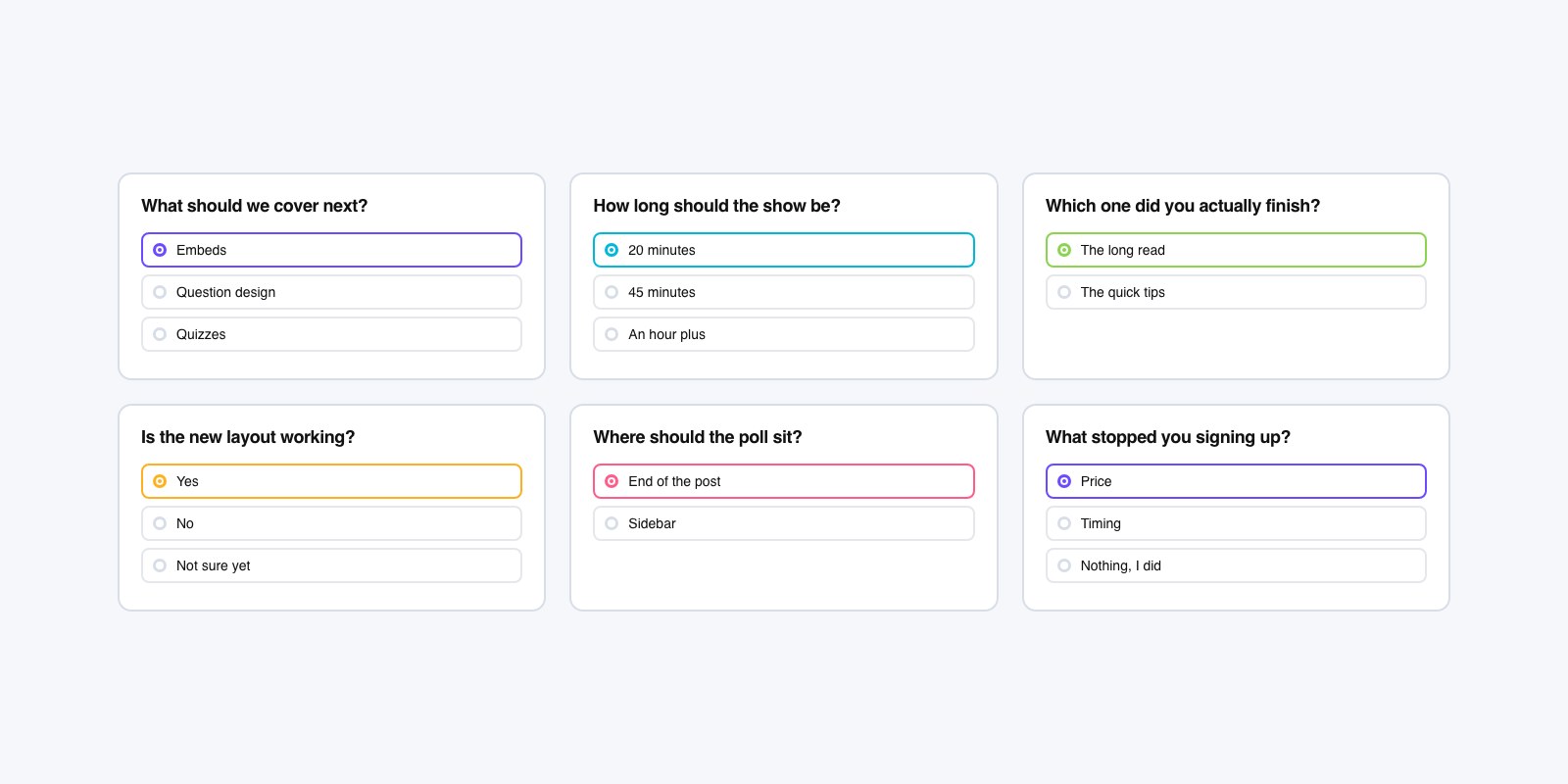
Poll Templates You Can Copy and Paste by Use Case
A blank poll builder is where good intentions quietly stall. You know you should ask your readers something, you open the tool, and then you sit there rewording one question until you talk yourself out of it. The fix isn’t more inspiration. It’s a starting point you can steal. Below are poll questions that already work, grouped by where you’d use them, with the answer options written out so you can paste any of them straight into the GFX Poll Studio creator and change three words. Treat them as scaffolding, not scripture. The best version always has your specifics in it.
Blog polls that pick your calendar
Two jobs a blog poll does well: choosing what you write next, and checking whether what you already wrote actually landed.
For the first, name real options instead of vague ones. A camera blogger can ask “Which guide should I write next?” with “Budget mirrorless bodies under $700,” “Lenses for low light,” “How to finally shoot in manual,” and “Something else, tell me in the comments.” Readers pick your editorial calendar for you, and the running tally gives them a reason to check back for the result.
The second is more useful and almost nobody runs it. At the end of a how-to, ask “Did this actually help?” with “Yes, I’m making it tonight,” “Sort of, but I’m stuck on one step,” and “No, this wasn’t what I needed.” That middle option is the whole point. It quietly hands you a to-do list of what to fix instead of a hollow thumbs-up.
Forum polls that pull replies
A forum poll should either settle something or start a fight worth having.
For settling, put a real decision to the room. “Should we add a dedicated off-topic channel?” with “Yes, keep the chatter out of the main rooms,” “No, it’ll splinter the community,” and “Only if it’s muted by default.” Now your lurkers get a one-tap vote and the mods get a mandate instead of a thread that turns into a slap fight.
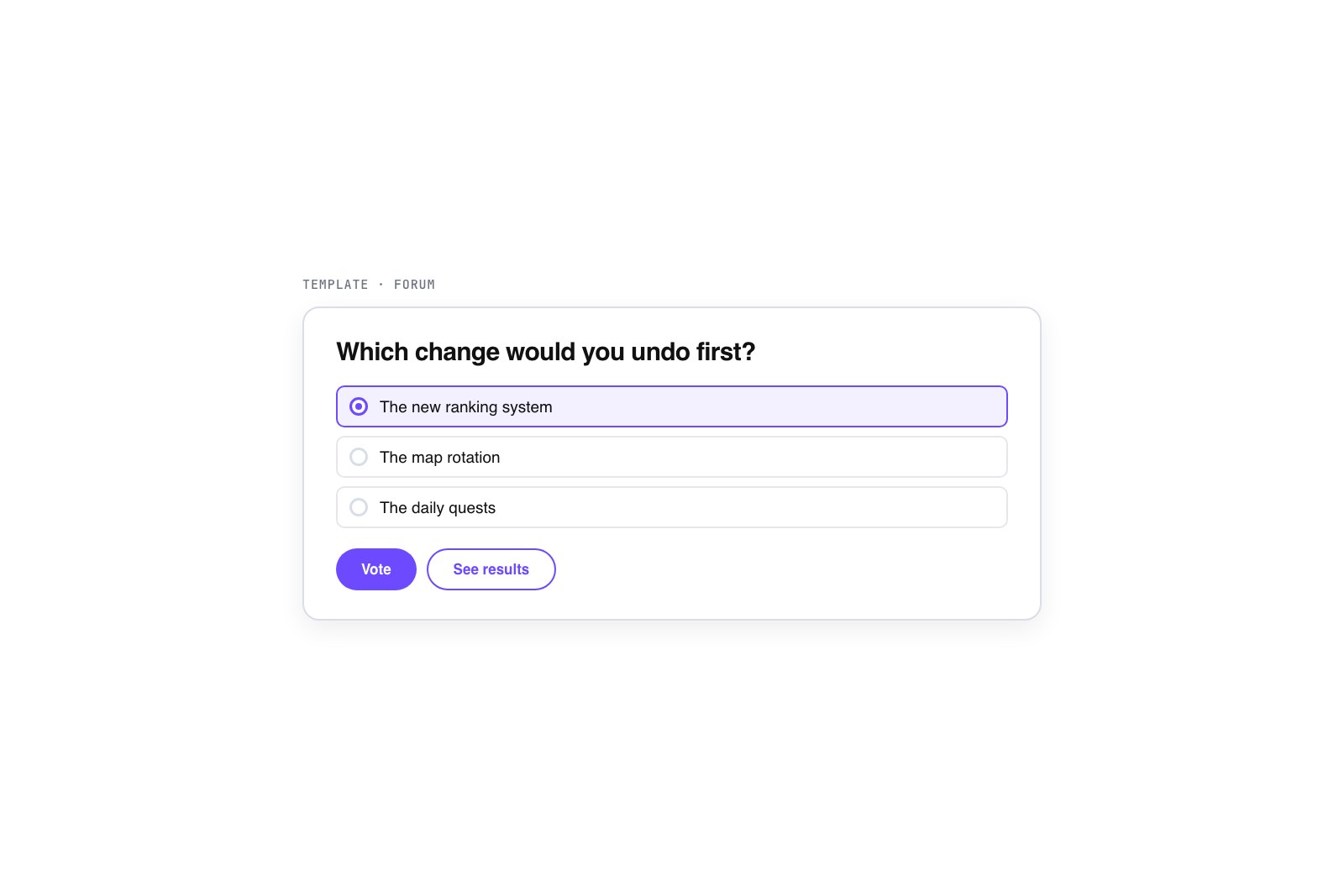
For the fight worth having, lean into a question your community already argues about. On a gaming forum, “Is the new patch a buff or a nerf overall?” with “Straight buff,” “Straight nerf,” and “Sideways, they just moved the problem.” A near-even split is the feature here, not a bug. Everyone wants to defend their answer, so the replies write themselves.
Newsletter polls people tap without thinking
An email poll has to survive on one tap, because that’s all a reader will give you between finishing your issue and closing the tab.
The workhorse goes in the footer: “How was today’s issue?” with “Loved it,” “It was fine,” and “Skipped most of it.” Three honest options, including one that lets people admit they bailed, beat a row of stars nobody believes. When “It was fine” starts winning, that’s a warning you’d never get from a five-star average.
When you want direction instead of a temperature, ask “What do you want more of?” with “Deep dives on one topic,” “Quick link roundups,” “Behind-the-scenes stuff,” and “Interviews.” Every tap is a piece of next month’s calendar, and readers like being asked instead of guessed at.
Product and SaaS polls that don’t lie to you
Software polls are great for priorities and dangerous for pricing, so treat the two differently.
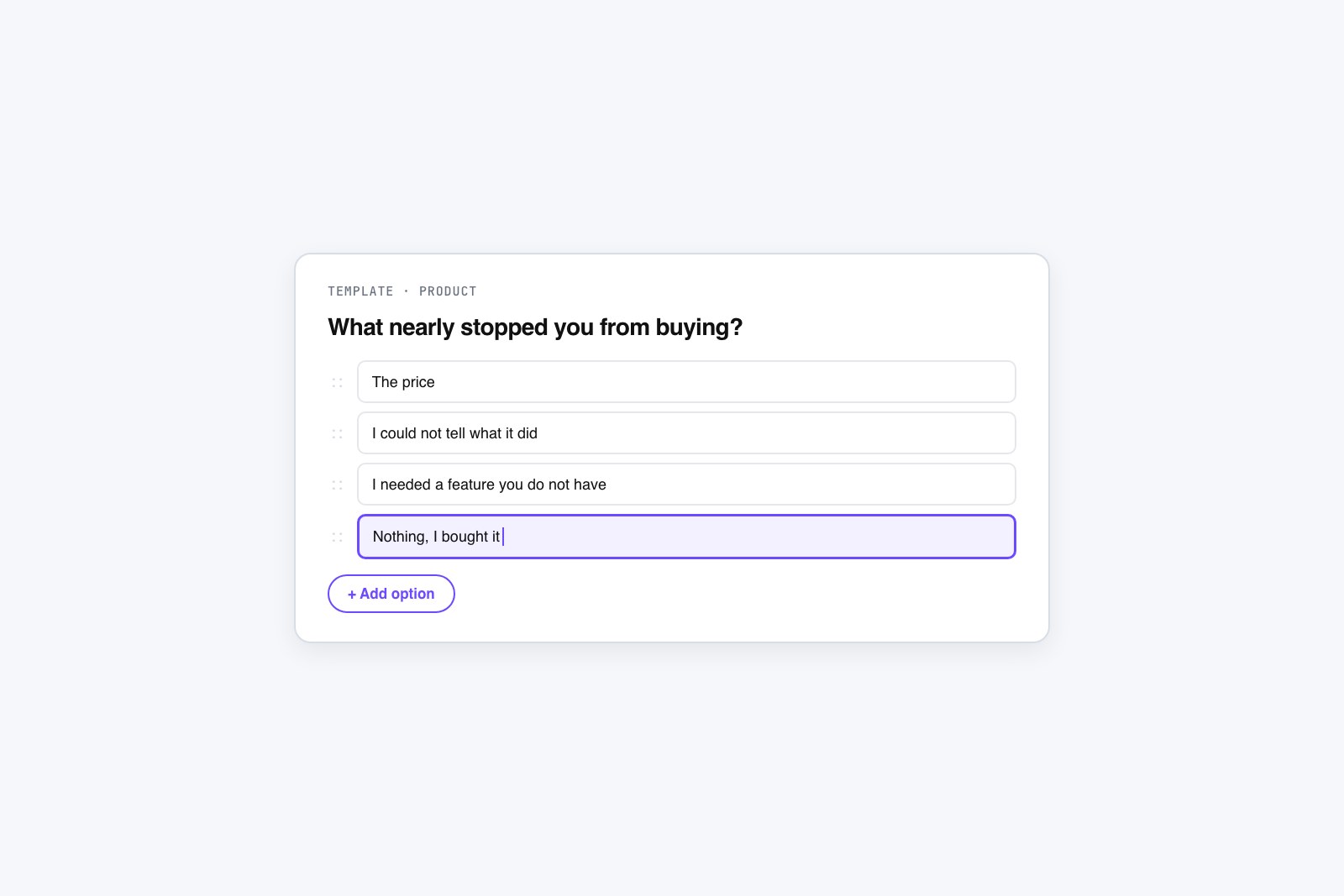
For priorities, “Which should we build first?” with three concrete features and a fourth option that reads “None of these, here’s what I actually need.” That escape hatch is where your best vote hides, because it surfaces the feature you forgot to list.
Pricing is the trap. You can run a quick gut-check, “At $19 a month, this plan feels…” with “Fair,” “A little high,” and “Way too much,” but read it as a temperature, not a number. A public tally warps every vote after the first, and price means nothing without the context around it. When the answer actually matters, that work belongs in a private survey, not a poll up on stage.
Event and community polls that settle logistics
When you’re wrangling people, a poll turns a messy scheduling thread into a decision.
Timing first: “Which session time works best?” with “Tuesday 10am PT,” “Thursday 1pm PT,” “Weekend morning,” and “None of these work for me.” You settle the calendar in public, and that last option tells you who you’re about to lose before you lose them.
Afterward, skip “did you like it?” and ask “Should we run this again?” with “Yes, same format,” “Yes, but shorter,” and “Not really my thing.” The “but shorter” vote is the real feedback hiding inside a yes, and it’s the one that makes the next event better.
Steal the shape, not the words
Every question above is a frame, not a finished poll. The reason they work is structure: one clear ask, three or four honest options, and always an out for the person who doesn’t fit your list. Copy that shape and it’ll carry almost any topic you throw at it.
What you can’t copy blind is the wording, because a template pasted in word-for-word is exactly how a leading question sneaks back in. “How much did you love the redesign?” is somebody’s old template with a new redesign dropped into it, and it poisons the data before the first vote. So run your version through the same checks you’d give any question you wrote from scratch. It’s worth a quick read on writing questions people actually answer and, if you tend to root for one particular result, on spotting the bias you didn’t mean to add. Steal the scaffolding. Write the words yourself.