Single vs Multiple Choice Polls: When to Use Each
Picking single choice or multiple choice looks like the smallest decision in a poll. Radio button or checkbox. But it quietly sets the math, and the math decides whether you get back a clean winner or a pile of percentages that refuse to add up. Choose wrong and you can run a perfectly worded poll that still can’t answer the question you asked. So it’s worth thirty seconds up front.
The two answer types do different math
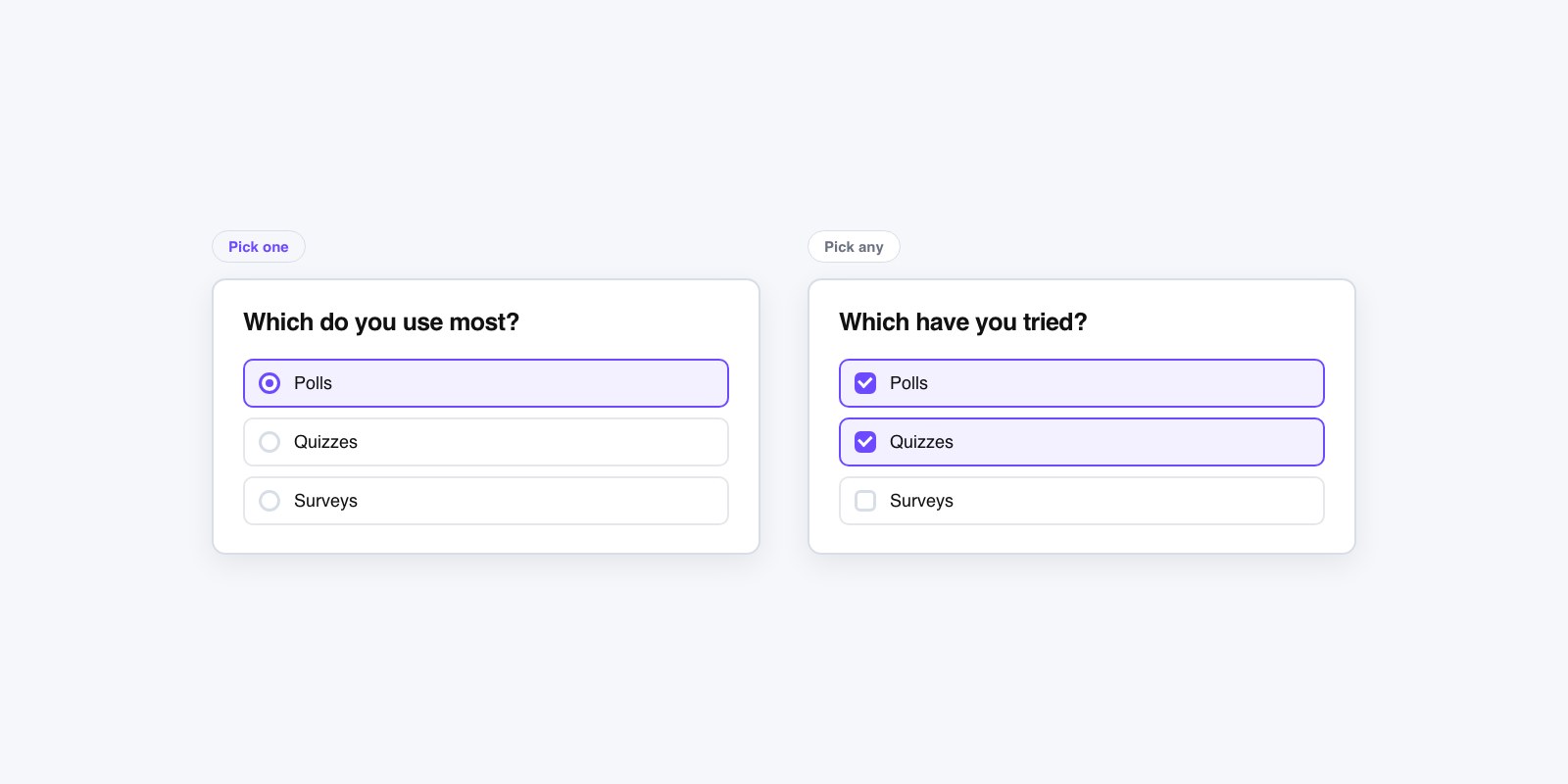
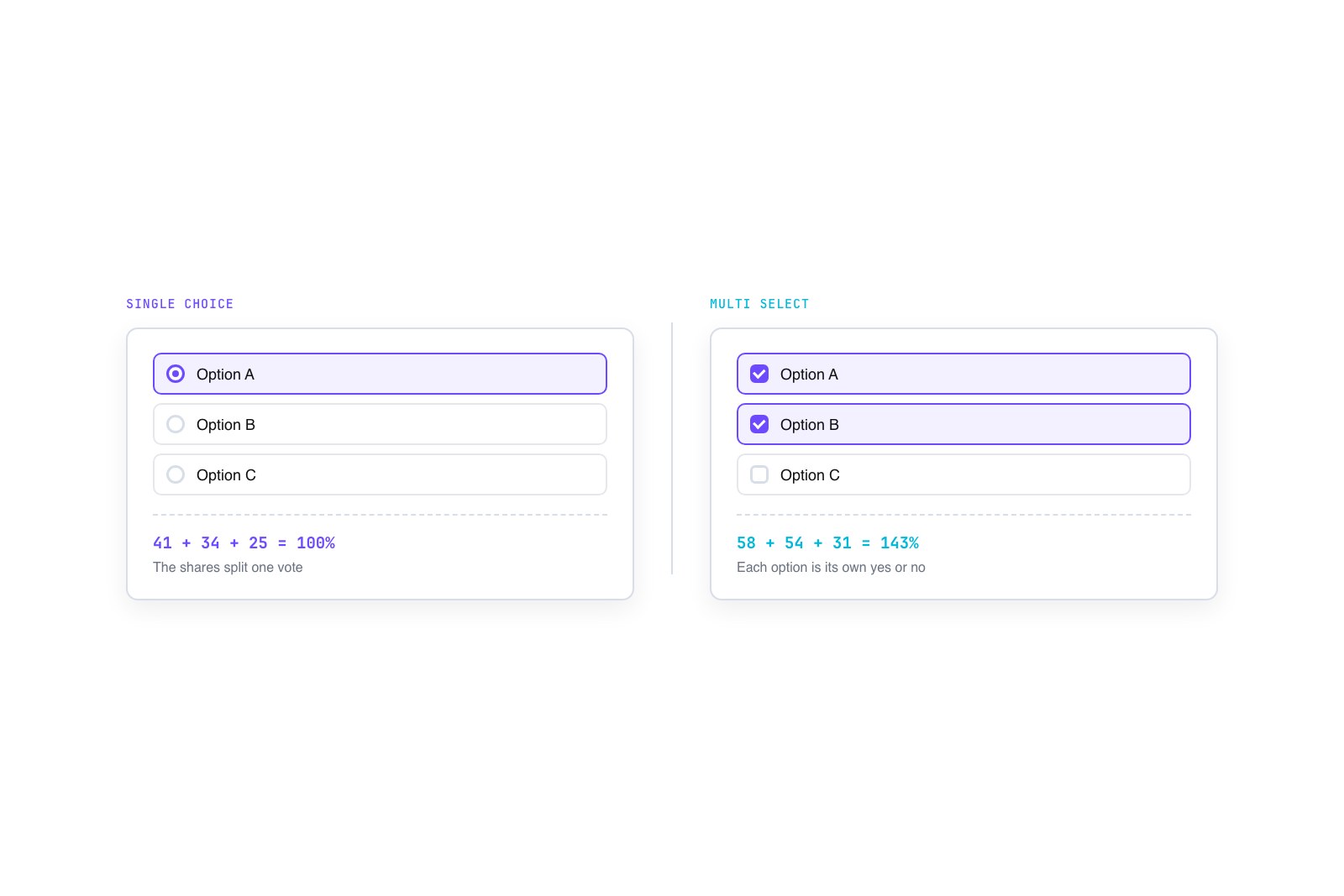
A single-choice poll lets each voter pick exactly one option. Because everyone spends their one vote somewhere, the results sum to 100 percent, and reading them is easy: the tallest bar won, by this much. A multiple-choice poll, sometimes called a multi-select poll, lets a voter tick as many boxes as apply. That breaks the tidy total. If 60 percent pick “Instagram,” 55 percent pick “TikTok,” and 40 percent pick “YouTube,” those don’t sum to 100, and they were never meant to.
Each bar is now its own little yes/no question: what share of voters chose this one? The two formats answer different questions. Single choice answers “which one?” Multiple choice answers “which of these?” Keep that one distinction in your head and most of the confusion around poll answer types goes away.
When to force one pick
Reach for a single choice poll whenever a real decision hangs on the answer, especially an A-versus-B call. You want the crowd to commit the way you’d have to commit if it were your call alone. “Which cover should we use for the guide, the blue one or the orange?” is a single-choice question. So is “Should Tuesday’s meetup start at 6 or 7?” and “Which of these two article ideas should we write first?” You’re not cataloguing preferences, you’re settling something, and single choice hands you a winner you can act on before you’ve finished reading the bars.
It also does quiet work on the fence-sitter. Forced to spend one vote, people actually weigh the options instead of shrugging and ticking everything that sounds fine. That pressure is a feature. It’s the reason a single-choice result feels decisive while a multi-select result often feels mushy. A Discord mod deciding between two event times, or a newsletter writer choosing which one story to lead with next week, wants that forced hand, not a wish list.
When to let people pick several
A multiple choice poll earns its place on additive, inventory-style questions, the ones where “all of the above” is a legitimate answer. “Which of these tools do you use?” is the classic. Nobody uses exactly one; the honest answer is three of them. Same with “Which of our recipe categories do you cook from?” or “Which platforms should we cross-post to?” Here you’re not chasing a single winner, you’re mapping how common each thing is across your readers.
A food blogger who learns that 70 percent of readers cook weeknight dinners and 45 percent also bake gets a genuine content map out of that, and neither number would survive being crammed into a single-pick race. A SaaS team asking “Which of these integrations would you use?” learns the same way: three answers each pulling 40 percent is a roadmap, not a tie to break. If the true answer to your question is often “several,” multi-select isn’t just allowed, it’s the accurate format.
The traps that catch people
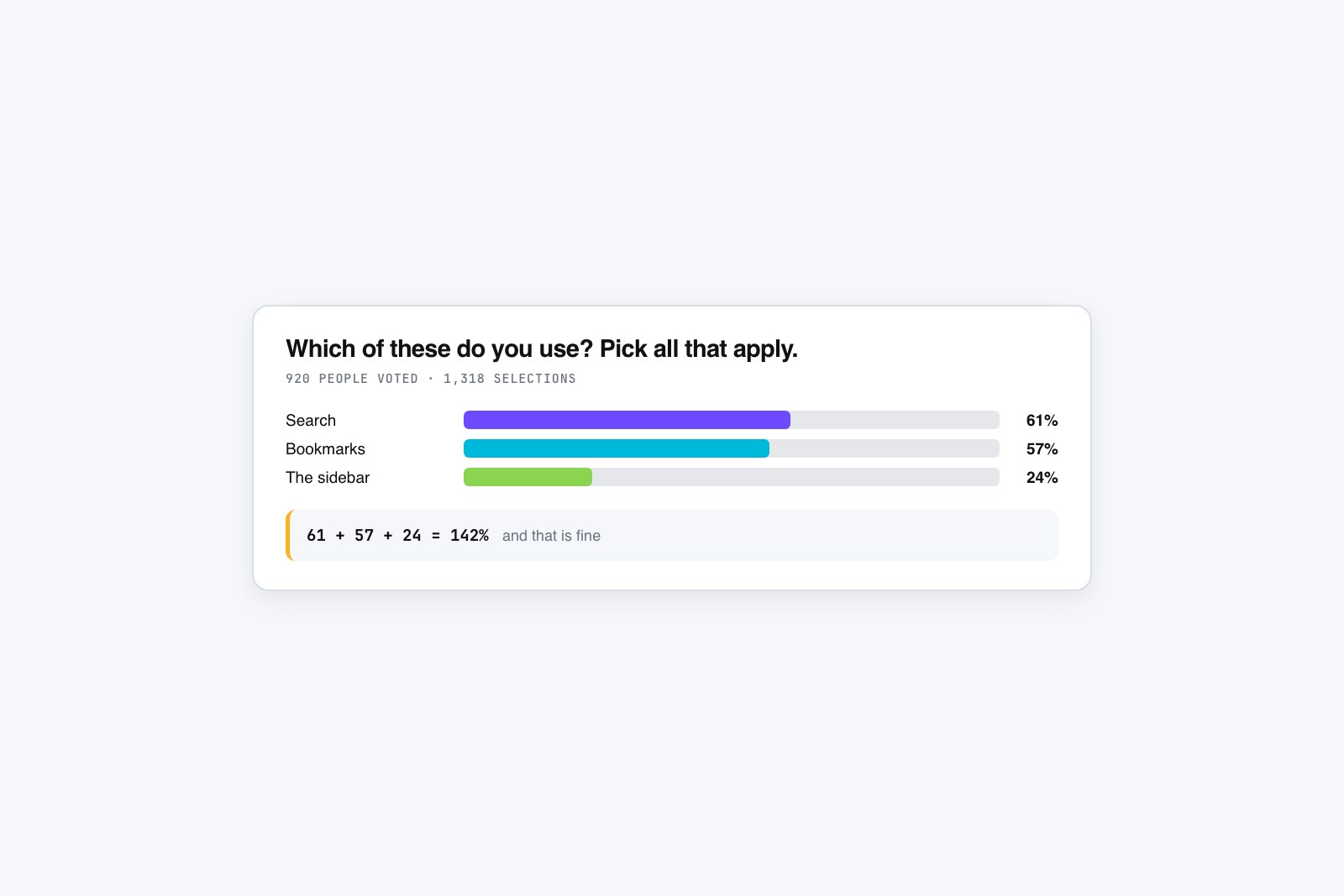
Two things go wrong. The first is inflation. Give people checkboxes and many will tick everything that looks mildly agreeable, so every option floats upward and nothing looks unpopular. A multi-select poll where five of six options all land near 60 percent hasn’t told you much except that readers are generous with checkboxes. If you need contrast, single choice creates it by making each vote cost something.
The second trap is confusion. Readers scan fast and assume radio buttons. Drop a checkbox poll on them with no cue and some pick one option, some pick four, and your result is a blend of two different behaviors you can’t untangle. Label it plainly. “Pick all that apply” above a multi-select, or “Choose one” above a single-choice poll, costs you four words and saves the whole dataset.
The test that settles it
Finish the sentence “I want to know ___,” then ask whether the true answer is one thing or possibly several. One thing means single choice. Possibly several means multiple choice. That’s the entire decision. When you build one in the GFX Poll Studio creator, it’s a single toggle, so you can start with single choice, see whether the results feel too forced or too clean, and switch. This sits right next to the question of how many options to offer at all, and both live under the wider walkthrough on creating a poll people actually answer. Get the answer type right first, though. No amount of careful wording rescues a poll that’s quietly asking the wrong kind of question.