How to Avoid Biased and Leading Poll Questions
A biased poll question fails quietly. It hands you a clean result, a confident 78 percent, a bar chart you can screenshot, and none of it means what you think it does. That is the real trap. A vague poll gets ignored, which is annoying but honest. A biased poll gets answered, and the answer looks solid enough that you go act on it. The five traps below all do the same thing in different ways: they smuggle your preferred answer into the question, then hand it back to you as data. Each one has a tell, and each one has a fix.
The leading question
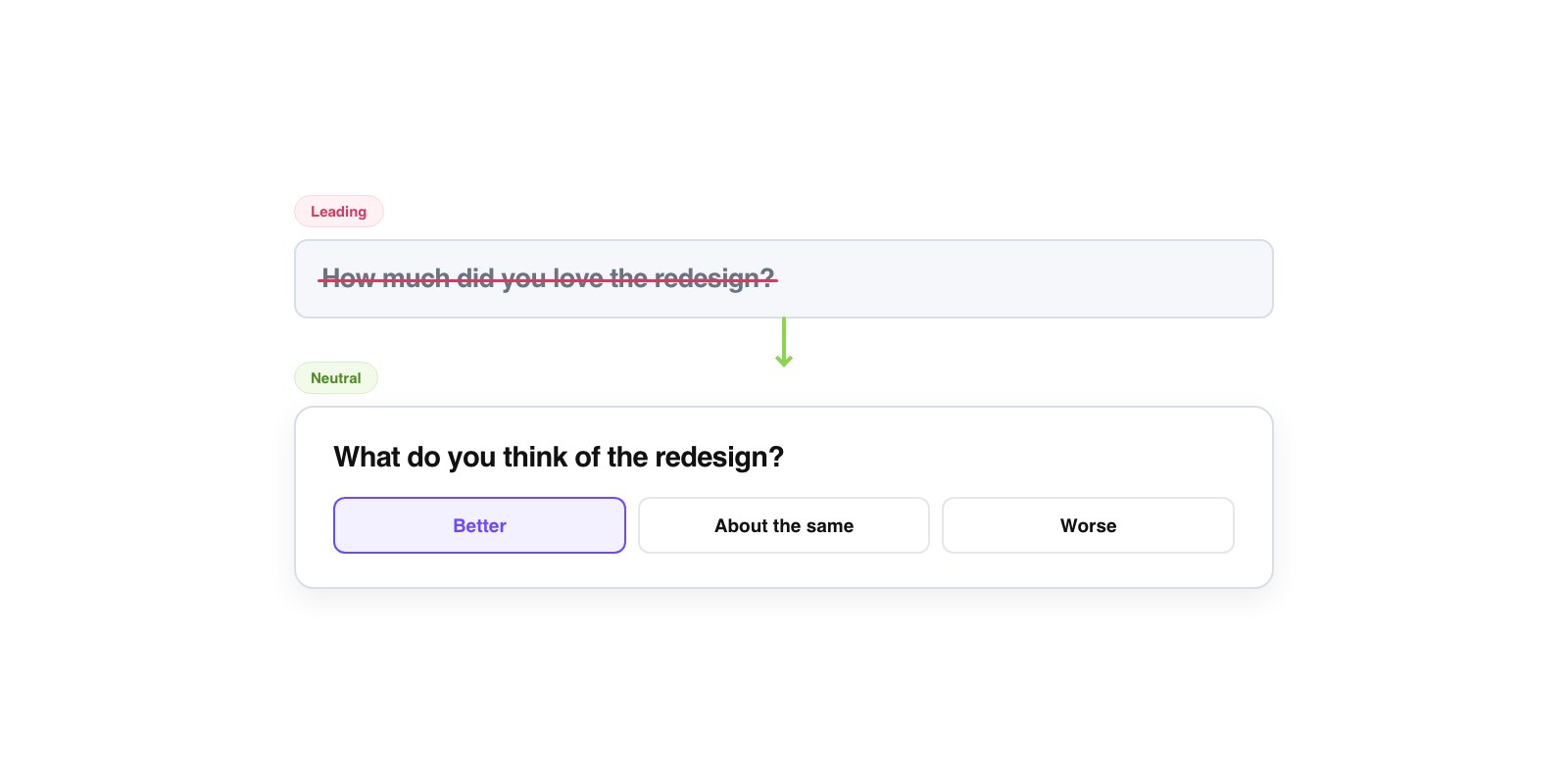
This is the most common own-goal, and it is easy to miss because it feels friendly. “How much did you love the redesign?” has already decided that you loved it. The only thing left to pick is the degree. Readers who hated it either skip the poll or shrug and tap the mildest option, so your results skew warm and you conclude the redesign was a hit. It was never measured. It was assumed.
The fix is to pull the verdict out of the question and put it in the options instead. “What do you think of the redesign?” with a real negative choice on the list, something like “I liked the old one better,” gives people a door to walk through. If nobody picks it, good, now you actually know. A neutral question with an honest set of answers is the whole game, and it sits at the center of writing better poll questions generally.
The loaded question
A loaded question buries an assumption the reader might not share. “Where do you usually read our newsletter?” sounds harmless until you notice it assumes they read it at all. Everyone who doesn’t is now stuck picking a lie or bailing on the poll. Same problem with “Which of our premium features do you use most?” on a recipe blog where half the audience never touched a premium feature. The buried claim, that they use the features, is doing the damage before the options even load.
Unbury it. Ask the assumption first, or fold it into the choices. “Do you read our newsletter?” as its own question, or a single poll whose options include “I don’t read it.” The rule holds across every version: if answering forces the reader to accept something they never agreed to, pull the assumption out and let them reject it.
The double-barreled question
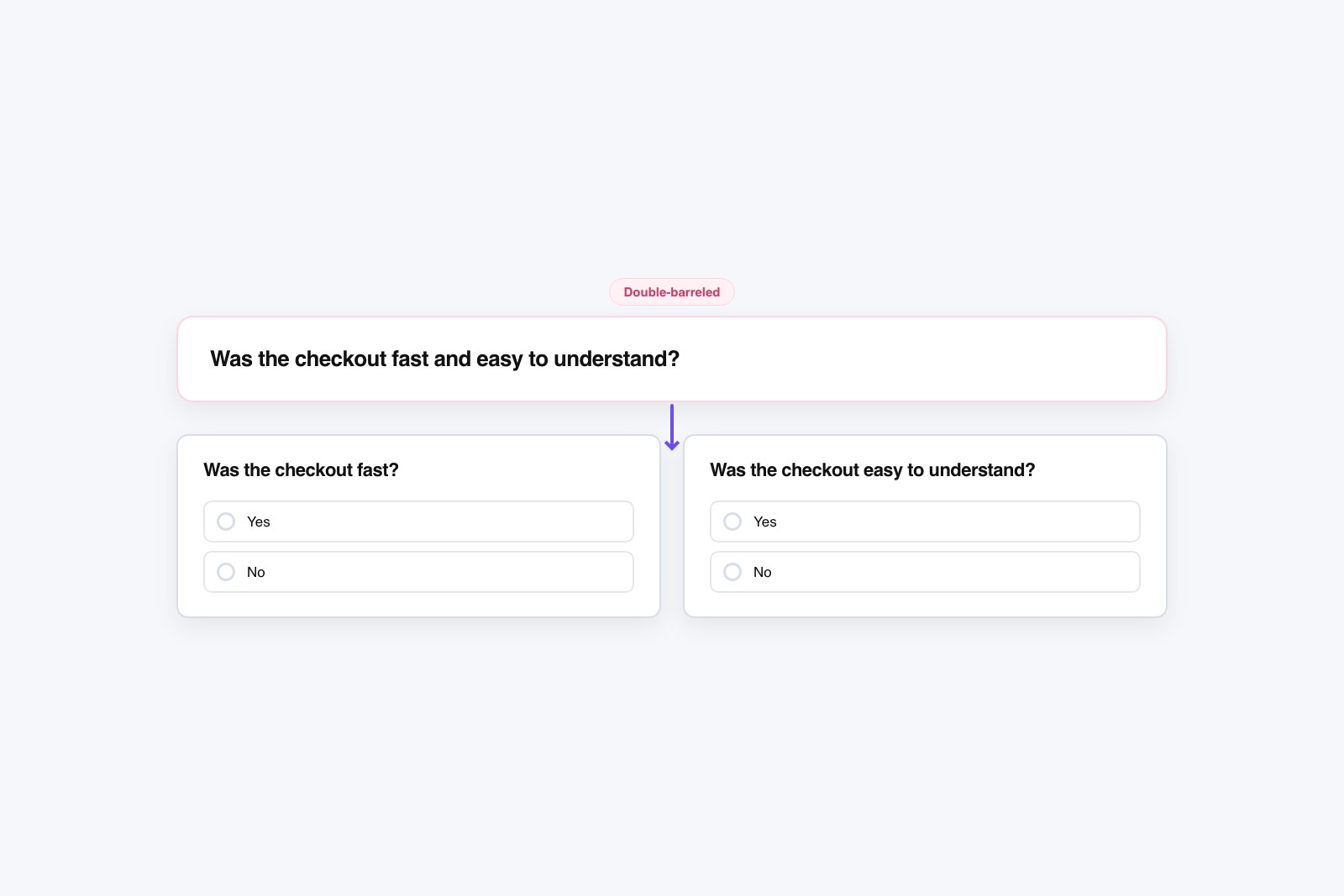
This one asks two things and only lets people answer once. “Was the article helpful and easy to follow?” What does a yes mean when it was helpful but confusing, or clear but useless? You have fused two measurements into one number, and you cannot unfuse it later. Forums do this constantly. “Should we add more channels and stricter rules?” leaves a member who wants more channels but looser rules with no honest way to vote.
Count the ideas in your question. If there is an “and” doing heavy lifting, you probably have two questions wearing one coat. Pick the one that matters most and ask only that, or run them as two separate polls. The different shapes a question can take, and when each one earns its place, are worth a closer look in survey question types explained.
Framing effects
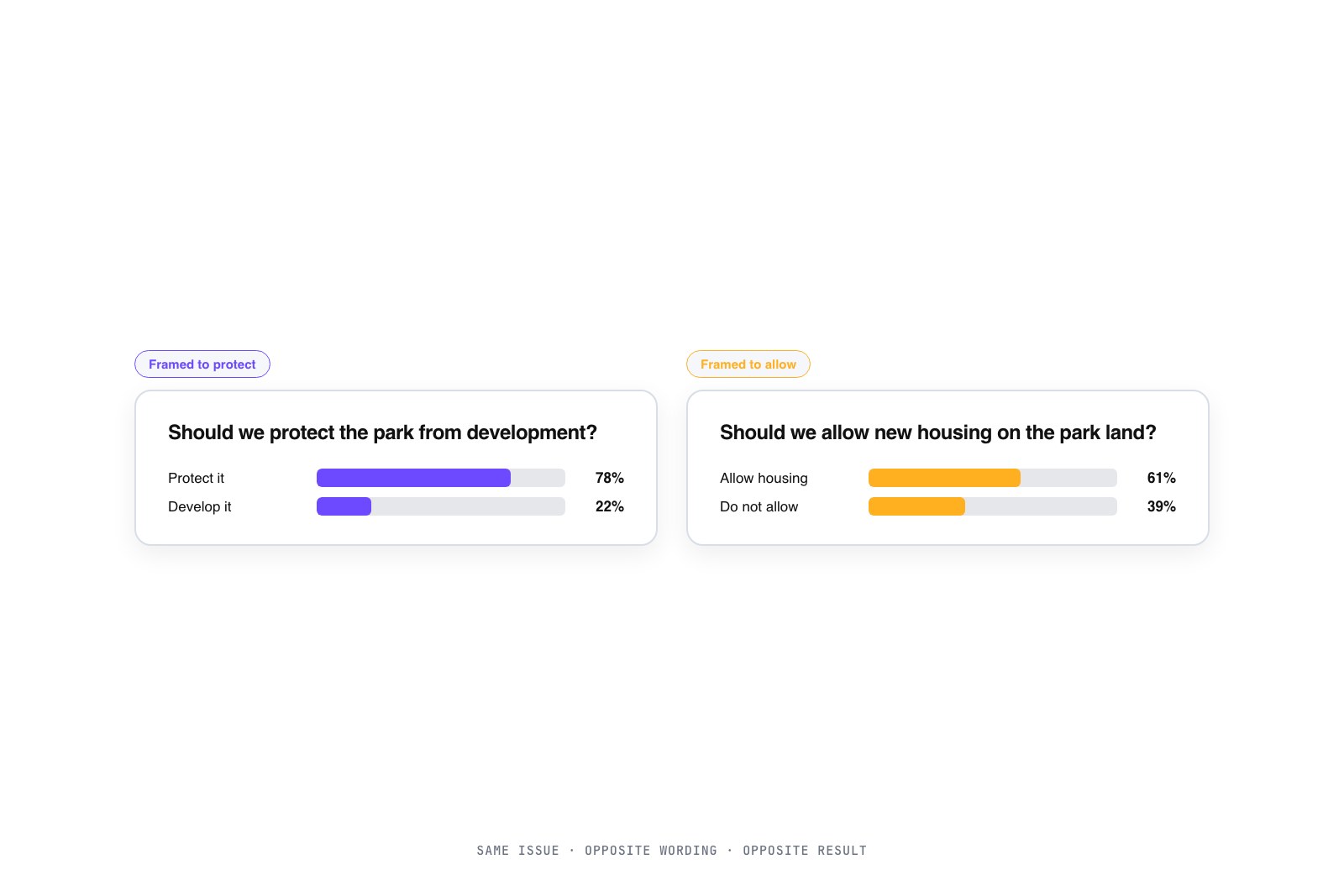
Two questions can mean the same thing and pull opposite answers, purely from wording. “Should we add a small fee to keep the forum ad-free?” and “Should we keep ads so the forum stays free?” describe one tradeoff, but the first frames the fee as the cost and the second frames the ads as the cost. A Discord mod asking “Should we crack down on off-topic spam?” has already labeled the posts as spam and the response as a crackdown. The words carry a verdict before a single person votes.
Neutral poll wording means describing the choice without tilting it. “How strictly should off-topic posts be moderated?” lets the room answer for itself. When you honestly cannot tell whether your phrasing leans, build both versions and test them. You can spin up two quick versions in the GFX Poll Studio creator and compare. If the same people answer differently depending on how you worded it, the wording was the finding, not the topic.
Acquiescence bias
People are agreeable, especially strangers online who just met your poll. Ask “Do you agree the new layout is easier to use?” and a share of readers will tap yes because agreeing is the path of least resistance, whether or not they mean it. Any question shaped as agree or disagree with a single statement leans this way. The statement sits there looking reasonable, and nodding costs less than objecting.
Beat it by making people choose between real options instead of agreeing with one. “Which layout is easier to use, the new one or the old one?” puts the two sides on equal footing and removes the free yes. If you want wording that already sidesteps these traps, there are reader poll templates you can copy to start from. But the deeper habit is simpler than any template: after you write a question, read it once as someone who disagrees with you. If they cannot answer it honestly, it is not done. A clean question will not always flatter you, and the results that sting are the only ones worth trusting.