Survey Question Types Explained
Pick the wrong question type and no amount of clever wording saves you. Ask a recipe blog’s readers to rank eight dessert ideas and most quit after the third one. Ask a plain yes/no when you actually needed a reason, and you learn that people disagree without learning why. The format sets the ceiling on what a poll can tell you, so the type is a real decision, not a default checkbox. Six of them cover almost anything you’d want to ask a website audience, and each is sharp at one job and clumsy at the others.
Single-choice and multiple-choice, the everyday defaults
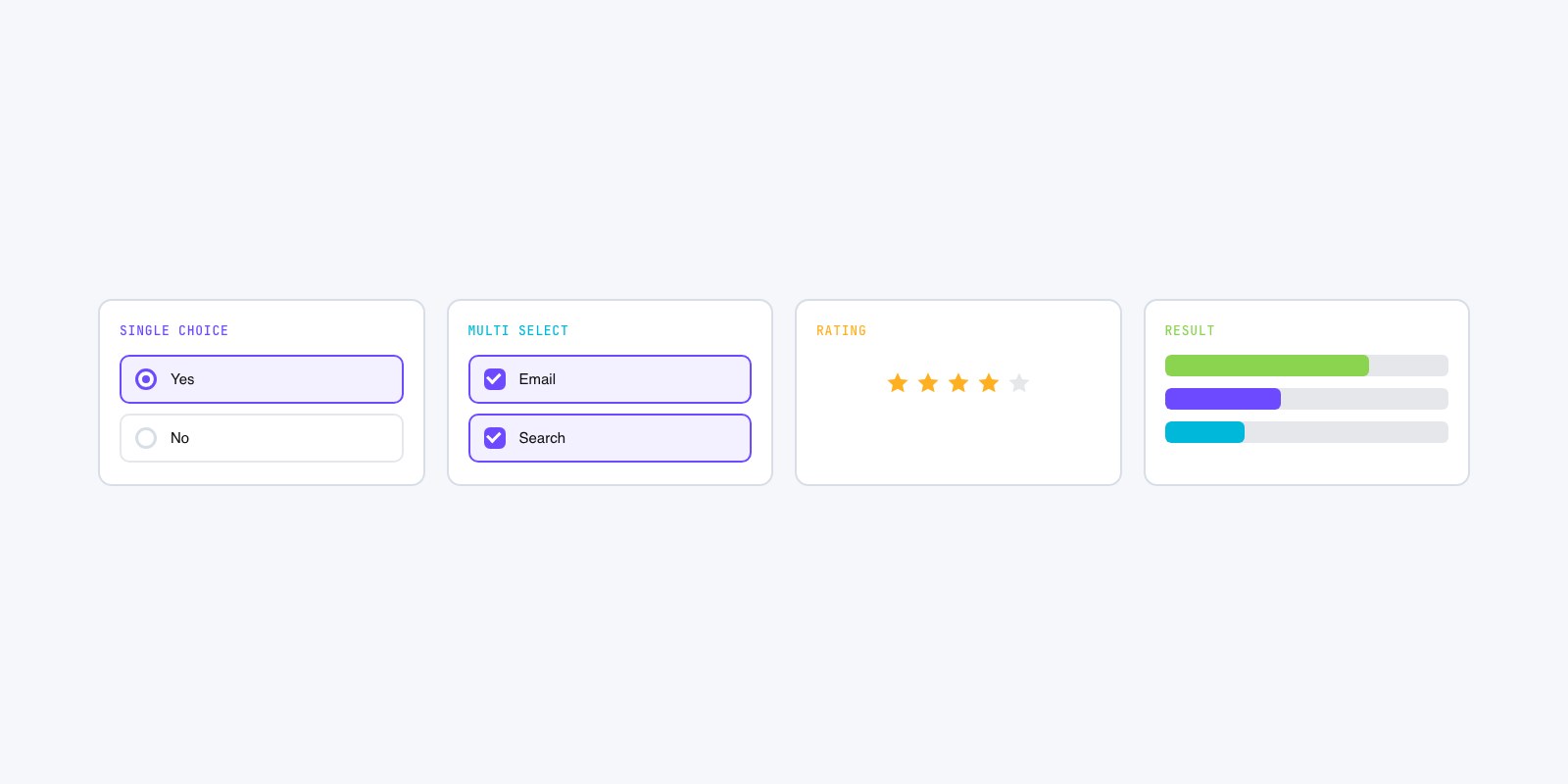
Single-choice, where a reader picks exactly one option, measures a clear preference and hands you results you can read at a glance. It’s the right call whenever you want a decision. “Which topic should I write about next?” with four options gives you a clean winner. The tradeoff is that it forces one answer even when someone’s honest reply is “a couple of these,” which can flatten a real split into a single tidy bar.
Multiple-choice, where people tick every box that applies, is built for additive questions like “Which of these tools do you already use?” It measures overlap and coverage instead of a single favorite. The cost is readability. The percentages no longer add up to a tidy 100, one popular option can swallow the chart, and eager voters check nearly everything, which puffs up the whole thing. Reach for it only when the question genuinely allows more than one true answer.
Rating scales and the Likert question
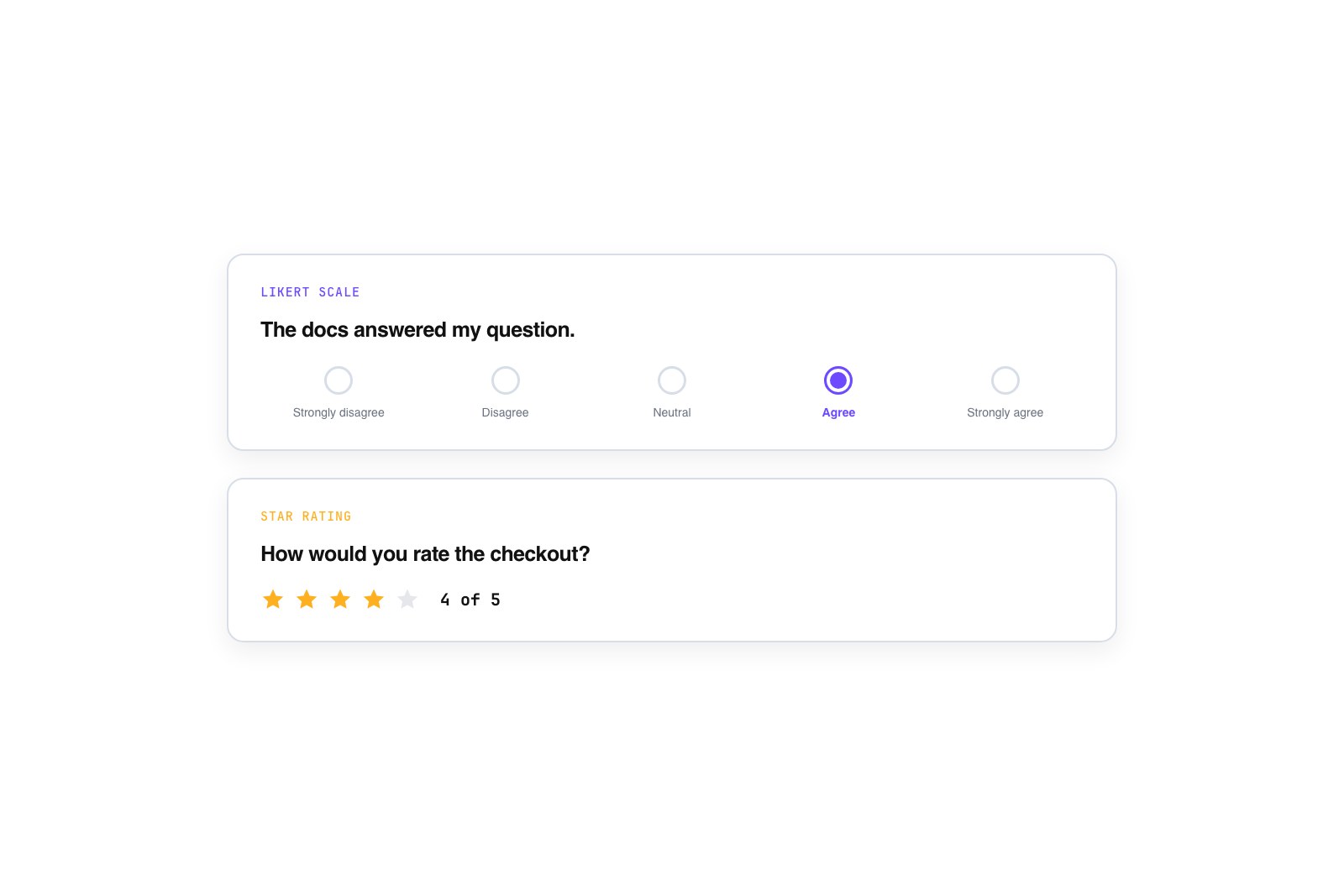
When you care how strongly someone feels, not just what they picked, use a rating question. A star rating (“Rate this recipe from 1 to 5”) or a Likert scale (“How useful was this guide?” running from “Not at all” to “Very useful”) measures intensity along a line rather than a single pick. That’s genuinely useful when the thing you’re testing has a temperature to it, like satisfaction or agreement.
The catch is that people crowd the middle and dodge the ends, so a five-point scale often behaves like a three-point one. A friendly audience also drifts high out of politeness. And an average hides more than it shows: a 4.6 can mean everyone is mildly happy, or half the room adores you and half is quietly furious. Read the spread, not just the mean, and keep the scale short enough that every point on it means something.
Ranking, powerful and tiring
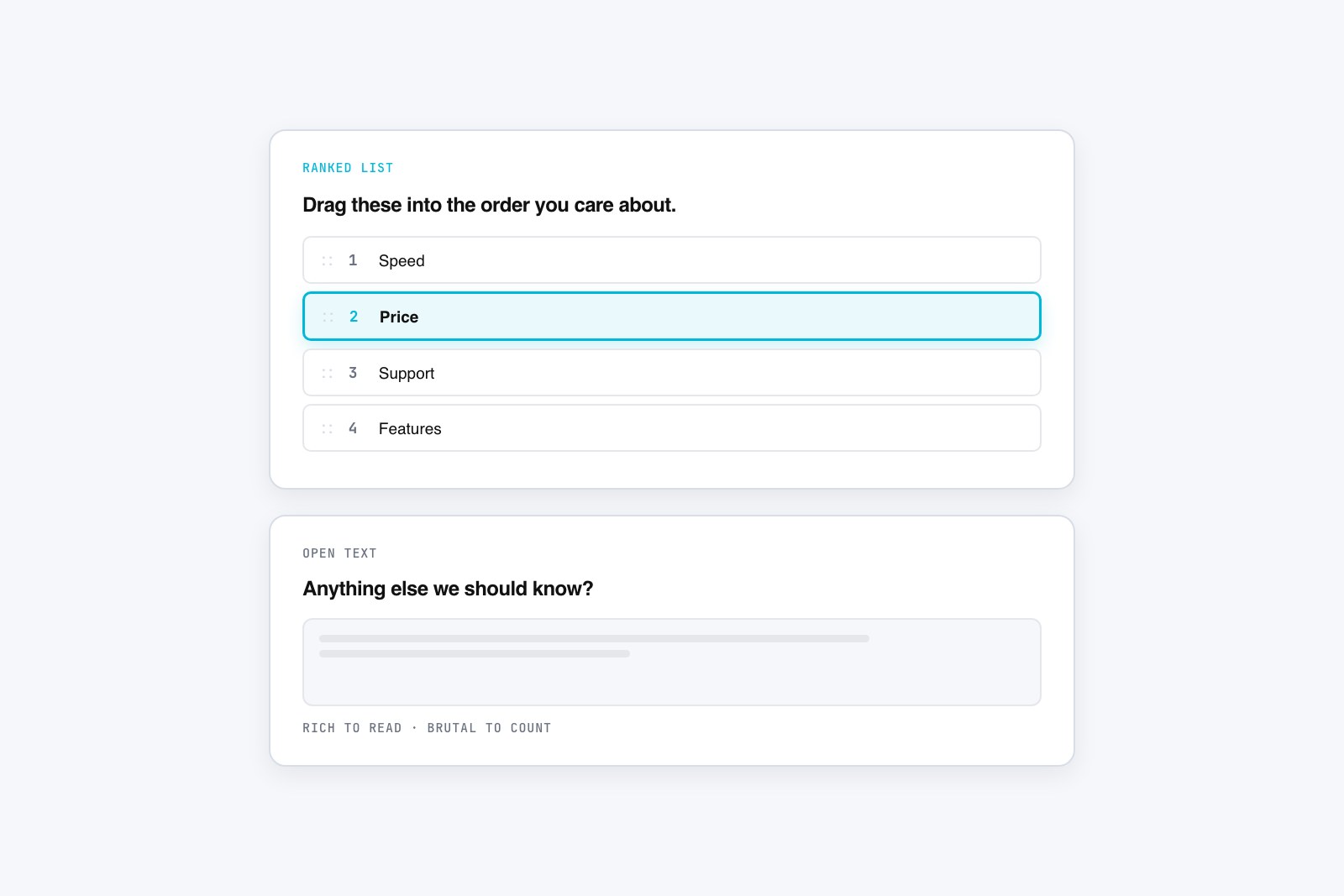
Ranking asks people to put options in order, and it measures something the other types can’t: the tradeoffs between choices, not just the top one. “Drag these five features into the order you’d want them built” tells you what readers will give up to get what they want, which is exactly the input a small SaaS needs before a roadmap call.
It’s also the most demanding format you can hand a reader. Sorting five items is real mental work, sorting eight is a chore, and on a phone the dragging gets fiddly and people bail. You get excellent data from everyone who finishes, and nothing from the larger group who won’t. Keep the list short, put it where motivated readers already are, and expect fewer responses than a single-choice on the same page would pull.
Open text, rich and impossible at scale
An open text box measures the thing you didn’t think to put on the list. “What’s the one thing you wish this newsletter covered?” surfaces answers and phrasings you’d never have guessed, and a nonprofit reading fifty of those learns more than any checkbox could teach. It’s the only type that lets a reader tell you that you asked the wrong question.
Then the volume problem hits. Fifty replies are a goldmine; four hundred are a folder nobody opens. There’s no chart and no percentage, just prose you have to read and sort by hand, and the moment a poll goes even mildly viral the open box becomes unusable. Treat these open ended questions as a discovery tool. Run one small, read every answer yourself, then turn what you find into a single-choice poll everyone can actually vote on.
Yes/no, the fastest question you can ask
A yes/no question measures one clean split and nothing else, which is its whole appeal. “Should I keep the weekly discussion thread going?” is the kind of thing a Discord mod can drop in chat and get two hundred answers to before lunch. Binary questions get the highest response rates because they cost the reader almost no thought.
They also flatten everything into two piles, so a “no” tells you people disagree without a word about why, and a run of yes/no questions is where leading wording does the most damage. “Do you love the new layout?” is technically a yes/no and quietly rigged. If two options can honestly hold the answer, this is the most efficient poll there is. The moment the truth is “it depends,” you’ve picked the wrong type. It’s worth knowing how leading phrasing sneaks into these before you post one.
Match the type to the question
The reliable move is to finish the sentence “I want to know ___” first, then pick the lightest type that answers it. Want a decision? Single-choice, or yes/no if two options really cover it. Want to know how strongly people feel? A rating. Want their priorities? Ranking, but only for a short list and only when you can afford to lose the people who won’t finish. Want to be surprised? One open text box, and the discipline to actually read them. Most of these are a dropdown away when you build one in the GFX Poll Studio creator, so the friction is never the tool, it’s picking the right shape.
One rule ties it together: if a single poll seems to need two different types, you’re really asking two questions and should split them. Which type to reach for is half the job; writing the question itself is the other half. If you’d rather start from something proven, borrow a structure from these reader poll templates and swap in your own topic.