How to Write Poll Questions People Actually Answer
You can pick the perfect poll type, drop it in the perfect spot, and style it beautifully, and it will still flop if the question is sloppy. The question is the whole product. Everything else is packaging. And most poll questions are worse than their authors think, not because the writer was careless, but because a question that reads fine in your head can quietly steer, confuse, or bore the person answering it. Fixing that is a craft, and it comes down to a handful of habits you can learn in an afternoon.
Say the question out loud before you post it
The fastest test for a poll question costs nothing: read it aloud. If it sounds like something a person would actually say, you’re close. If it sounds like a form from the DMV, rewrite it. “To what extent are you satisfied with the frequency of our content updates?” is not a sentence anyone speaks. “Are we posting too much, too little, or about right?” is. Saying it out loud catches most of the sins at once, because spoken language resists the padding and stiffness that creep in the moment you start typing.
A recipe blogger asking readers what to make next doesn’t write “Please indicate your preferred culinary direction for upcoming content.” She writes “What should I bake first this fall?” The words are shorter, the answer is easier, and more people click. That gap, between how you’d type a question and how you’d ask it across a kitchen table, is where most bad poll questions live.
One question, one idea
The most common structural mistake is cramming two questions into one. “Was the checkout fast and easy?” looks innocent, but fast and easy aren’t the same thing. If checkout was quick but confusing, the reader has no honest answer, so they guess, and your data turns to mush you can’t act on. These are called double-barreled questions, and they’re everywhere once you start looking.
Watch for the word “and” sitting in the middle of a question. It isn’t always a problem, but it’s where the second idea usually hides. “Do you find our newsletter useful and enjoyable?” is really two polls wearing one coat: useful is about substance, enjoyable is about tone, and a reader can easily feel one without the other. Split it. Ask about usefulness in one poll and tone in another, or pick the one you actually care about right now and let the other go.
The four traps that tilt a result before anyone votes
Beyond structure, four kinds of bias sneak into wording, and each one bends the result before a single person clicks.
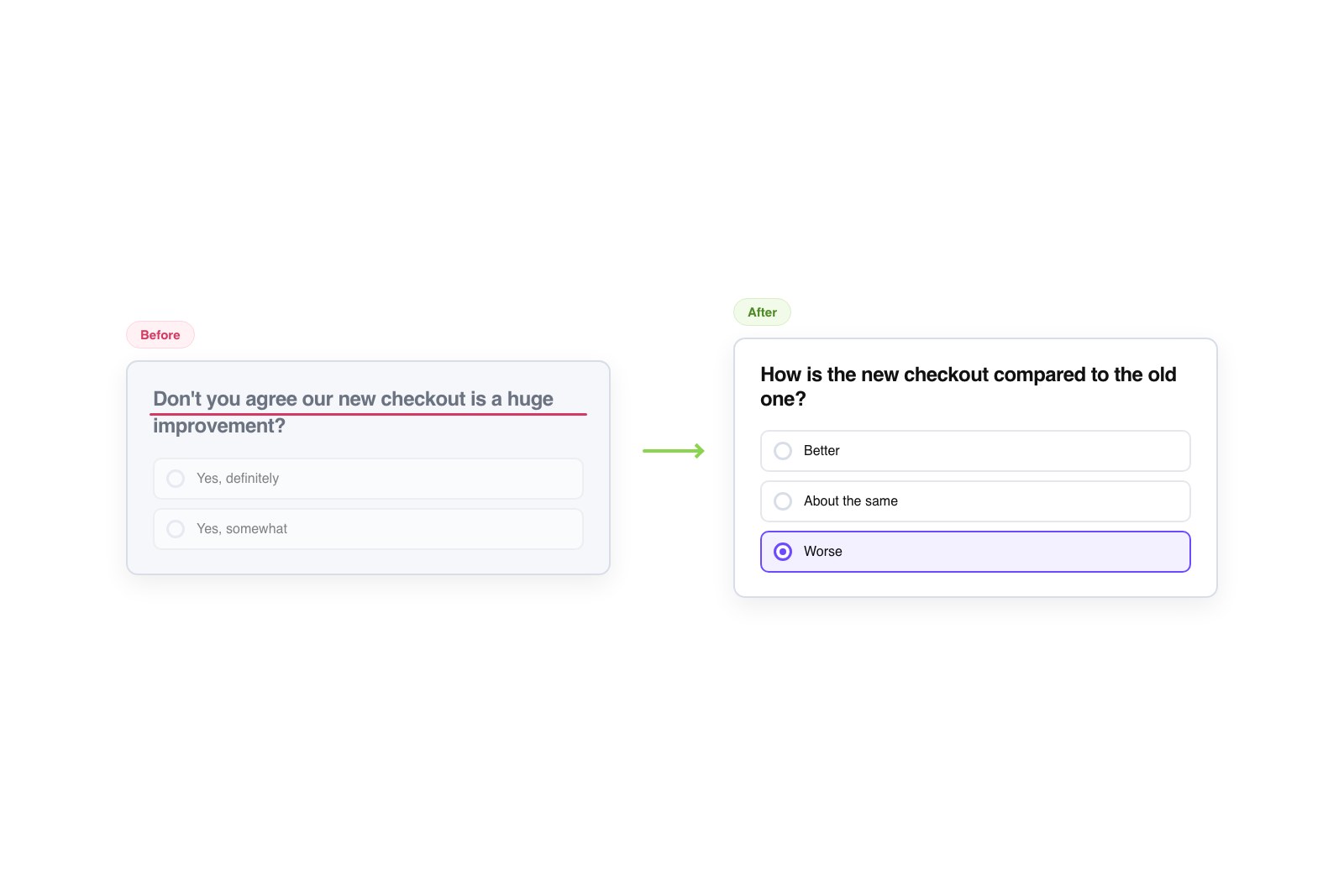
The leading question tells people the answer you want. “How much did you love the new layout?” has already decided you love it; all that’s left is picking a number. Neutralize it: “What do you think of the new layout?” with a genuinely negative option on the list. The loaded question smuggles in a jab or an assumption. “Should we keep pouring money into features nobody uses?” isn’t a question, it’s an argument, and even readers who agree feel handled. Strip the editorial: “Which of these features should we prioritize next?”
The assumptive question takes something for granted about the reader. “Which of our premium tools do you use most?” assumes they pay for premium at all, so free users either lie or leave. Give them a true exit, like an “I don’t use the premium tools” option or a screening question first. And the jargon question hides behind words your audience doesn’t use. A SaaS team asking about “omnichannel content cadence” will get shrugs; the same team asking “How often do you want to hear from us?” will get answers. When in doubt, use the word your reader would use, not the word your industry would. There’s more to how question formats behave, and a full breakdown of the survey question types and what each one is good for is worth a read when you’re building something bigger than a quick one-off poll.
Write the options as carefully as the question
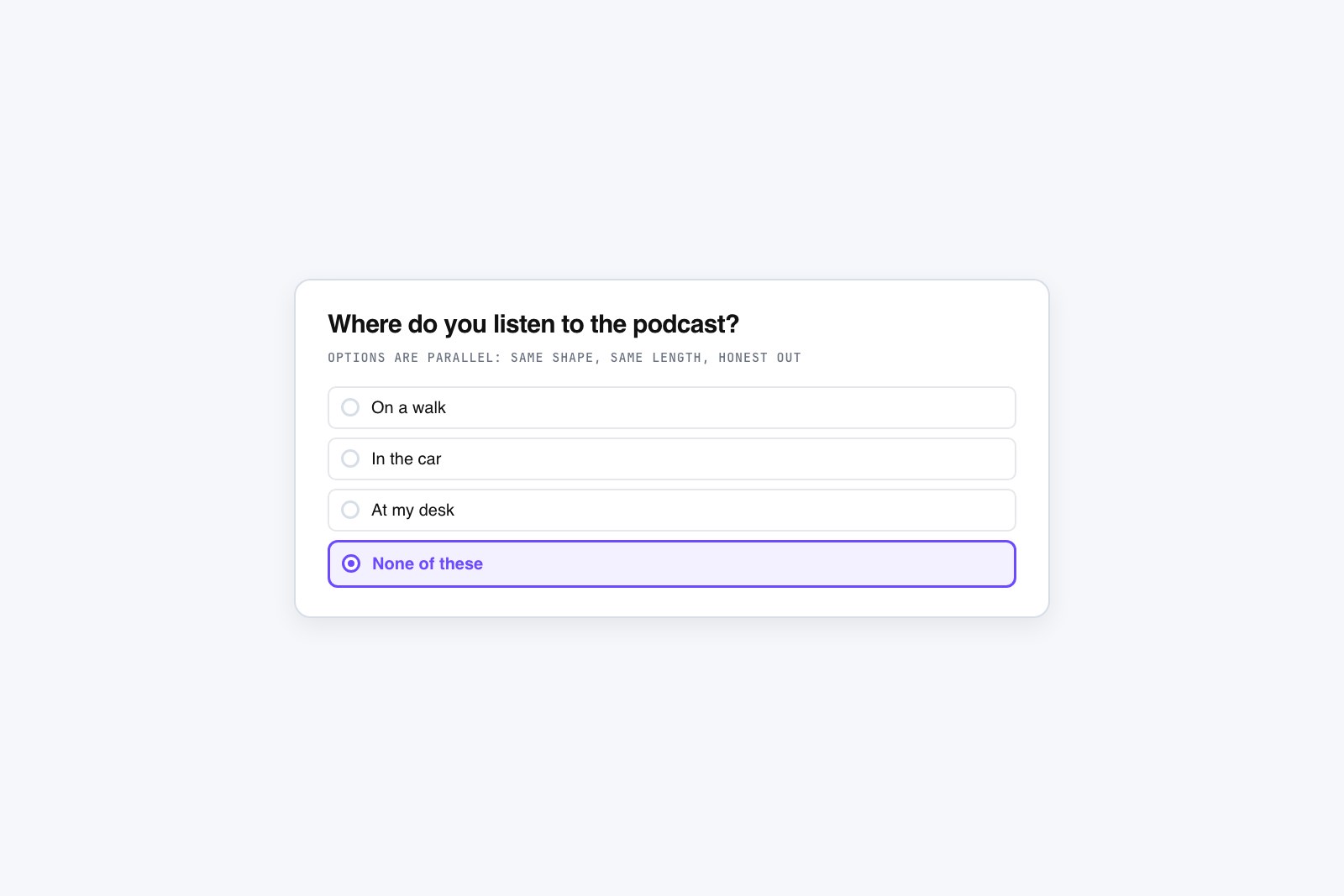
A clean question with sloppy options is still a broken poll, because people answer the options, not the question. Keep the choices roughly parallel in length and grammar. If three options are two words and the fourth is a full sentence, the long one reads as the “serious” answer and pulls votes it never earned. Match their shape: all short, all the same kind of phrase, all pointing at the same kind of thing.
Use plain language in the answers too. “Yes,” “No,” and “Not sure” beat “Affirmative,” “Negative,” and “Undecided” every time. And always give an honest out. A poll with no “None of these” or “Something else” forces people who don’t fit your list to either bail or pick a lie, and both wreck your numbers. If “None of these” ends up winning, that isn’t a failure, it’s the poll telling you the real answer wasn’t on the menu. Biased options do as much damage as biased questions, so if you want to go deep on spotting the slant in both, how to catch biased and leading wording is the close look worth taking.
Match the question to what you’ll actually do with the answer
Here’s the habit that saves the most wasted polls: before you write a single option, finish the sentence “When the results come in, I will ___.” If you can’t, don’t run the poll. A Discord mod asking “What time should we run the weekly event?” has a clear next move: schedule the winning slot. A nonprofit newsletter asking “How do you feel about our mission?” has nowhere to take the answer, so the poll is just noise dressed up as engagement.
The decision behind the poll also tells you how sharp the question needs to be. If you’re choosing between two article topics to write next, a blunt “Which should I publish first, the budget guide or the gear guide?” is perfect, because the answer maps straight onto a choice you’re about to make. If you only want to give readers a fun reason to click and come back for the result, you have more room to play, but you still owe them a question worth having an opinion about. The build itself is the easy part once the wording is right, and the mechanics of picking a type, embedding it, and reading the results get their own walkthrough in the guide to creating a poll for your website.
So write the question you can act on, keep it to one idea, give people honest ways to answer, and read it back out loud one more time before it goes out. When you’re ready to build, you can spin one up in the GFX Poll Studio creator in a couple of minutes, and if a blank field is what’s stopping you, a set of reader poll templates you can copy gives you proven wording to start from instead of a cursor blinking at an empty box.