Poll vs Survey: Which One Should You Use?
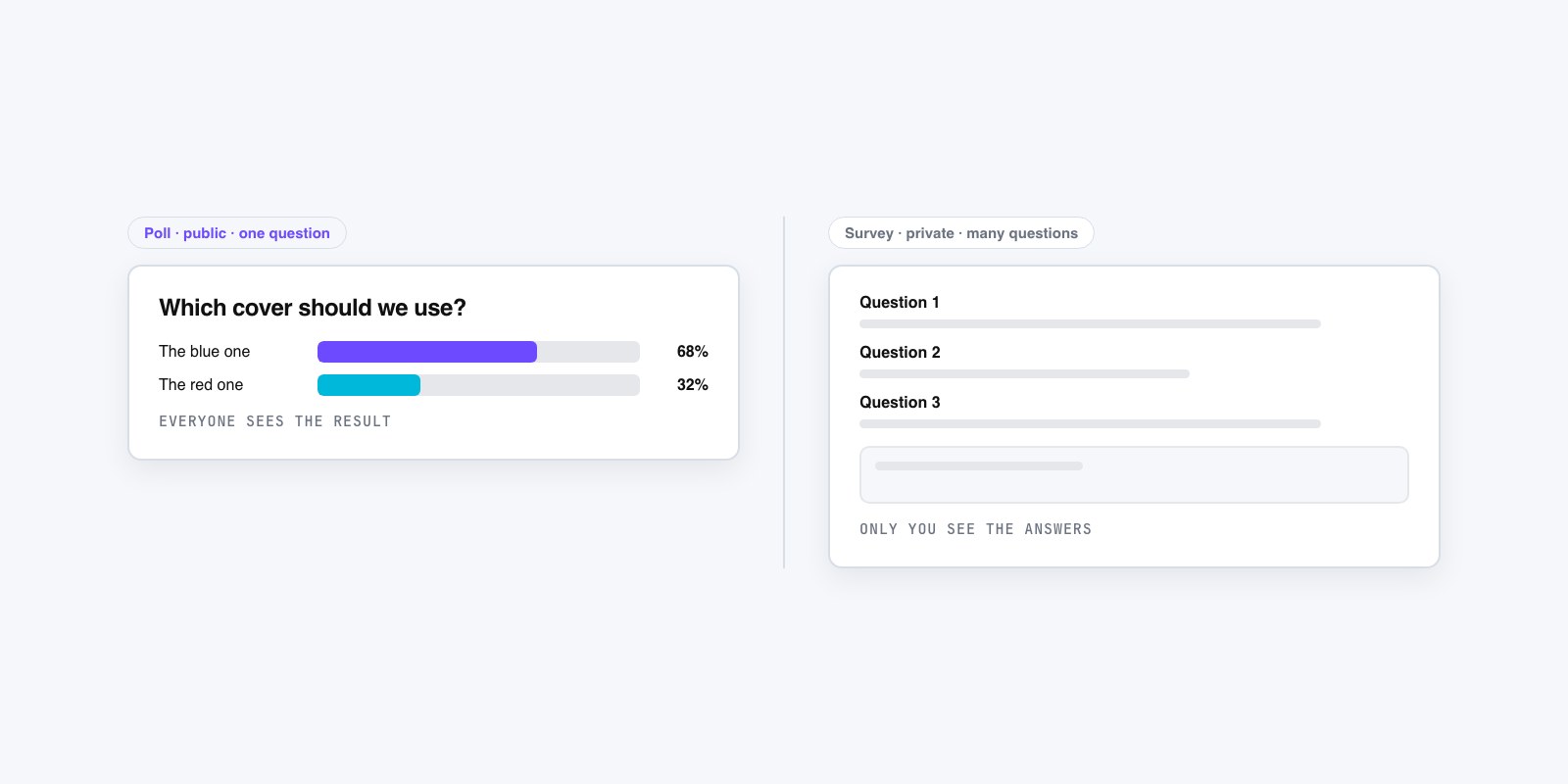
People treat “poll” and “survey” like the same thing at two lengths, as if a poll is just a survey that got tired and quit after one question. That framing gets people building the wrong thing constantly. The real difference has nothing to do with how many questions you ask. It’s about what you plan to do with the answer, and who gets to see it. A poll is a public pulse built to be seen and shared. A survey is a private measurement built to be studied. Once you sort them by purpose instead of length, picking the right one stops being a guess.
A poll is public; a survey is private
Here’s the cleanest line between them. A poll’s result is part of the experience. Readers vote and then see the tally, and that shared tally is half the point. “62% of you would rather we drop the sequel and start something new” is content. It gives people a reason to click, a reason to come back, and something to argue about in the comments. The visibility isn’t a side effect. It’s the whole engagement engine.
A survey hides the answers. Nobody filling one out sees the other responses, and that privacy is exactly why it works. A person will tell you their real budget, their honest gripe, or which competitor they almost switched to precisely because it’s not going up on a public bar chart. You collect quietly, look at everything together, and the individual respondent never becomes a data point on stage. That’s the trade: a poll spends its answers as content, a survey banks them as research.
Length is a symptom, not the definition
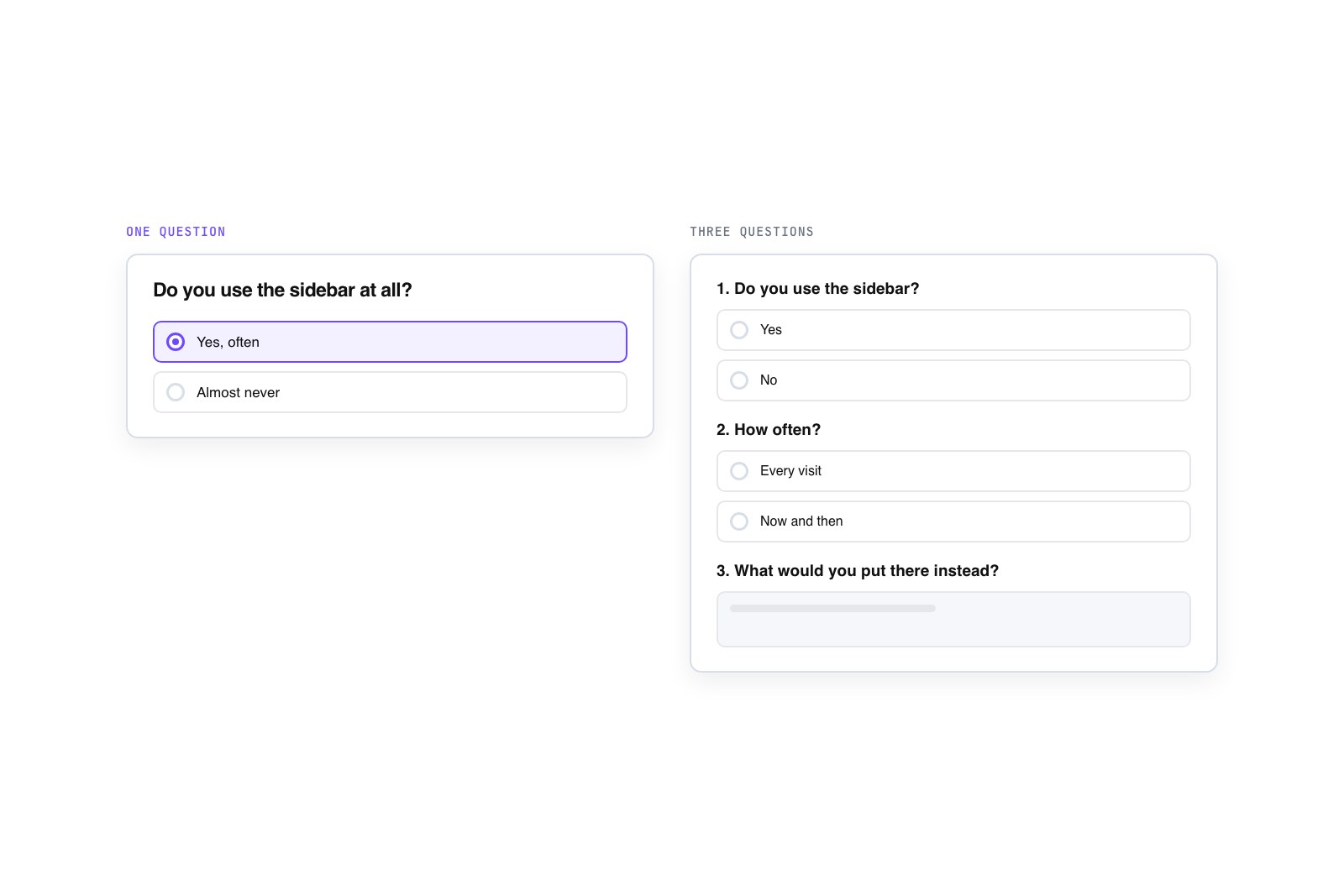
Yes, polls are usually one question and surveys are usually several. But that’s downstream of purpose, not the thing itself. A poll is short because a public, in-context question has to be answerable in the two seconds between paragraphs. Ask a reader five questions in a sidebar and you’ll get four abandons for every finish.
A survey is longer because studying something properly takes more than one angle. If a course creator wants to price a new product, one question won’t do it. They need to know what someone already paid for something similar, what outcome they’re actually buying, and where the price stops feeling worth it. Those answers only mean something read together. The poll stays short to stay public and frictionless; the survey grows because each question is another coordinate on the same map. Count questions and you’ll sometimes guess right, but you’re reading the symptom instead of the cause.
When a poll wins
Reach for a poll when the answer is meant to be seen, and when you want participation more than precision. A blogger deciding the next post is the textbook case. “Which should I write next: the budget camera guide or the lens roundup?” dropped at the end of a related article does three jobs at once. It picks your topic, it tells readers you’re listening, and the running result keeps people checking back. Nobody needs to fill out a form for that. They need one tap and a tally.
The same logic covers a Discord mod gauging whether to add a new channel, a newsletter writer asking which of two topics gets the next deep dive, or a shop testing “would you actually buy this in green?” These are low-stakes, high-visibility questions where being roughly right in public beats being exactly right in private. You’re taking a temperature in front of the room, and the room enjoys watching the number move. If you’re weighing single-choice against multiple-choice for one of these, that decision has its own walkthrough on picking single or multiple choice, but the poll itself is the right container.
When a survey wins
Switch to a survey the moment the answer needs to be honest, private, or connected across several questions. Pricing a product is the clearest example. A course creator can’t run “what would you pay?” as a public poll, because the visible tally warps every vote after the first, and because price alone tells you nothing without the context around it. A short private survey does the real work: what they’ve paid before, what they’re stuck on, how urgent it feels. Read together, those answers point at a number. As a public bar chart, they’d point at nothing.
Same story whenever the truth is uncomfortable or the topic is layered. A nonprofit asking why lapsed donors stopped giving, a SaaS team digging into why trial users churn, a store figuring out why carts get abandoned, all of these need privacy to get candor and several questions to get the shape of the problem. A poll would either scare people off or flatten a five-dimensional answer into one bar. When you need to understand a decision rather than just tally a preference, the form beats the widget.
Sometimes you want both, in order
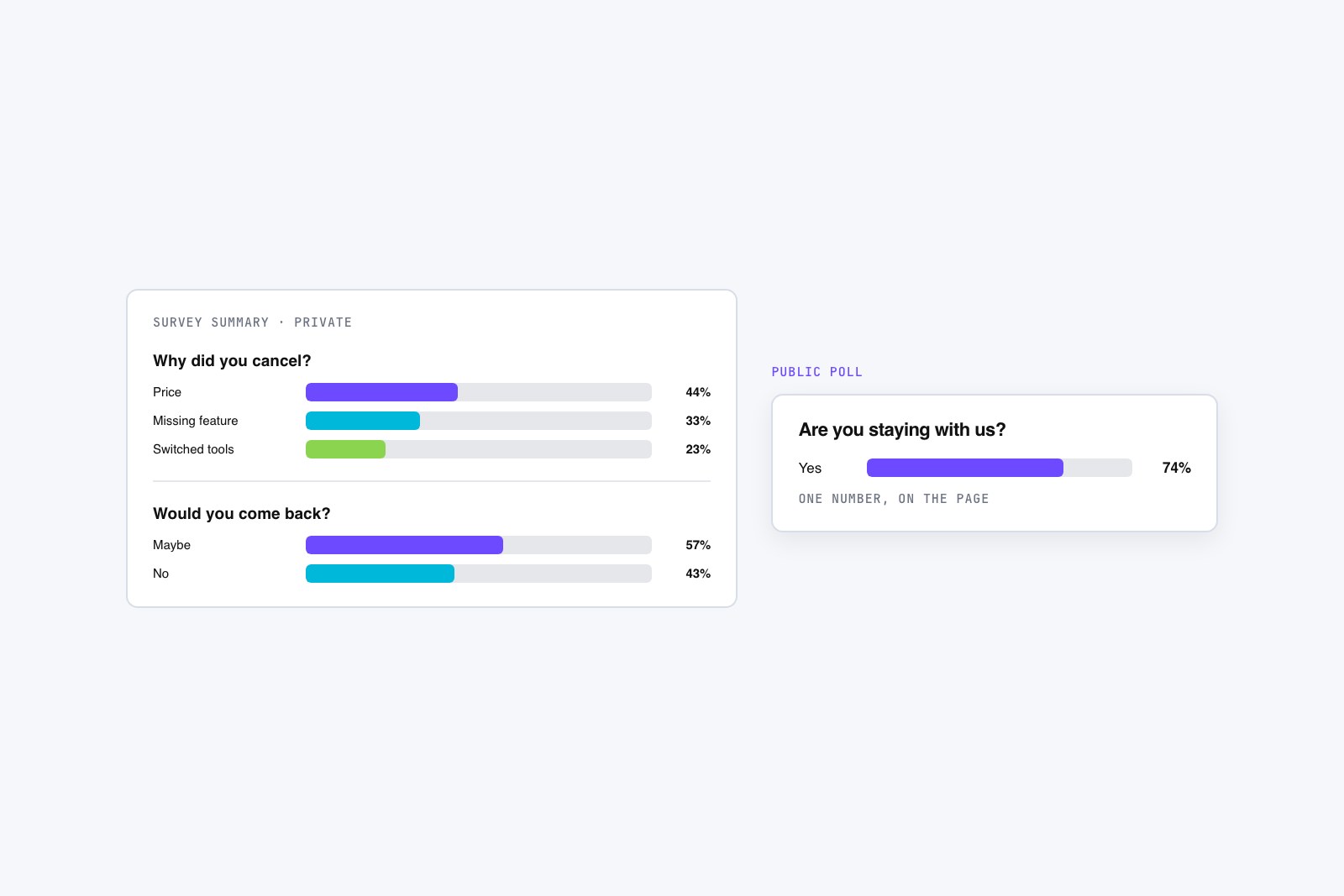
The two aren’t rivals, and the smartest move is often to run them in sequence. Use the poll to find the interesting question, then use the survey to answer it properly. A poll shows a near-even split on some feature people clearly care about. That’s your cue to send the handful who care most a short survey and learn why. The poll surfaced the signal in public; the survey chases it down in private.
You can start either one in the same place. The GFX Poll Studio creator spins up a public poll in under a minute, and the same instincts that make a good poll question, one clear ask and honest options, carry straight into a good survey. If your instinct is still to default to a poll, that’s usually right for a website, and the fastest way to get comfortable is the full walkthrough on building one that people actually answer. Just remember the tell when you’re stuck: if the answer is meant to be seen, poll it; if it’s meant to be studied, survey it. And once the votes are in, reading them honestly is its own skill, which is why it’s worth knowing how to read poll results without fooling yourself before you act on the winning bar.