How Many Poll Options Should You Have?
The instinct, when you sit down to build a poll, is to be thorough. List every option you can think of so nobody feels left out. That instinct is exactly what quietly ruins the poll. A reader hits a wall of eight choices, reads the first three, picks whatever is close enough, and clicks off. You didn’t measure an opinion. You measured how far down the list people bother to read. The number of answer options is doing more work than the question itself, and most polls get it wrong in the same direction: too many.
Two to five is the range that actually works
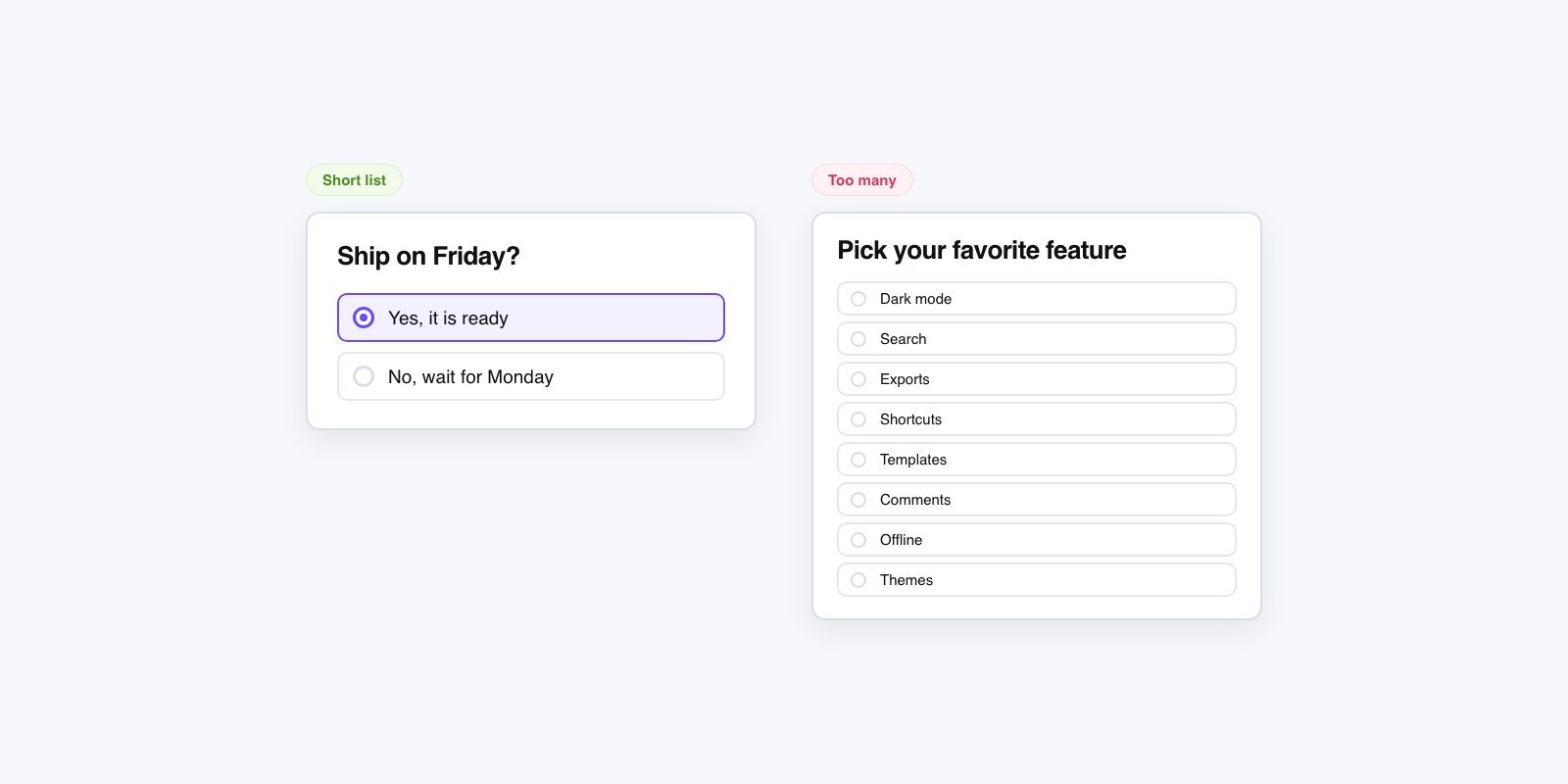
For a website poll, two to five options is the sweet spot. A four-choice question like “What should we cover next?” with four real topics reads in a single glance, and every option gets a fair look. Once you push past six, something predictable happens. Order becomes destiny. The option sitting at the top wins, not because it’s the best answer but because it’s the first one a skimming reader accepts. That’s primacy, or order bias, and it isn’t a small effect on a casual poll where nobody is reading carefully. Keep the whole list visible without scrolling, short enough to take in at once, and the position of an option stops deciding the result for you.
The right count follows the question, not a target. “Should we keep the comment section? Yes or No” is a two. “Coffee, tea, or neither?” for a morning newsletter is a three. “Which post format do you want more of: how-tos, roundups, interviews, or opinion pieces?” is a clean four. A Discord server asking “Which game night works best: Monday, Wednesday, Friday, Saturday, or Sunday?” needs its five. Notice what happens if you try to stretch any of those to nine: you start inventing options nobody was going to pick.
When two options is the whole poll
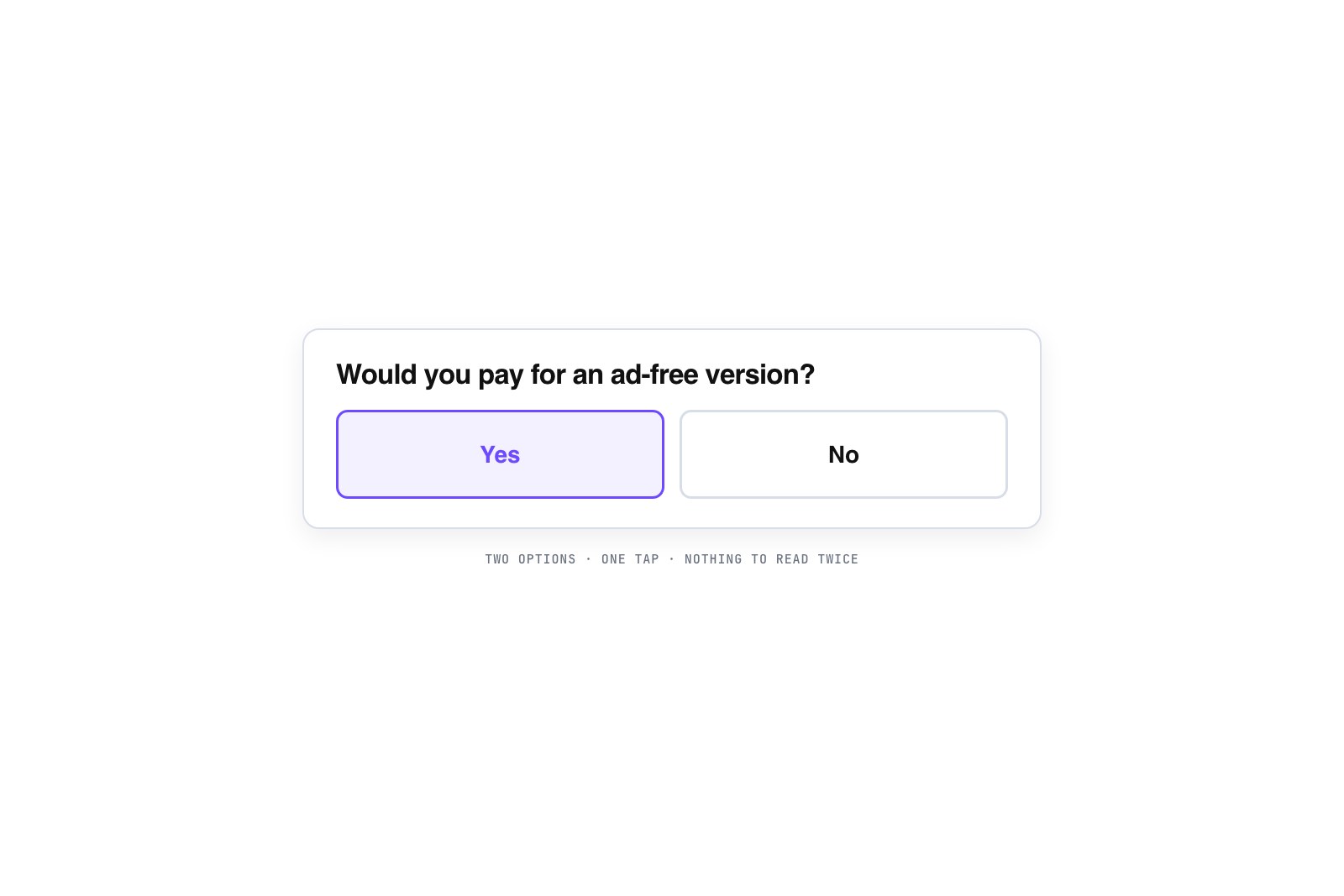
Two answers is not a lesser poll. For a lot of questions it’s the strongest one. “Did this recipe work for you? Yes or No.” “Team pancakes or team waffles?” A binary poll forces a clean split, carries almost no reading load, and gives you a result you can act on at a glance. There’s nowhere to hide and nothing to skim. Reach for two whenever the question genuinely has two sides, a yes/no or a this/that. Adding a third option here often just muddies a result that wanted to be sharp.
When you actually need more, and when you only think you do
Sometimes the world really does have five answers. “Which of these camera brands do you shoot with?” has a handful of distinct, real options, so list them. That’s fine. The trap is padding: adding choices because you can, not because they’re separate answers people actually hold. If two options mean roughly the same thing to a reader, merge them. Before you add a sixth or seventh choice, ask whether anyone would truly pick it, or whether it’s there to make the list look complete. The deeper question of when to let people pick several answers instead of one is worth its own walkthrough on single-choice versus multiple-choice polls, but the option count itself follows the same rule: only real, distinct choices earn a slot.
The case for “Other” or “None of these”
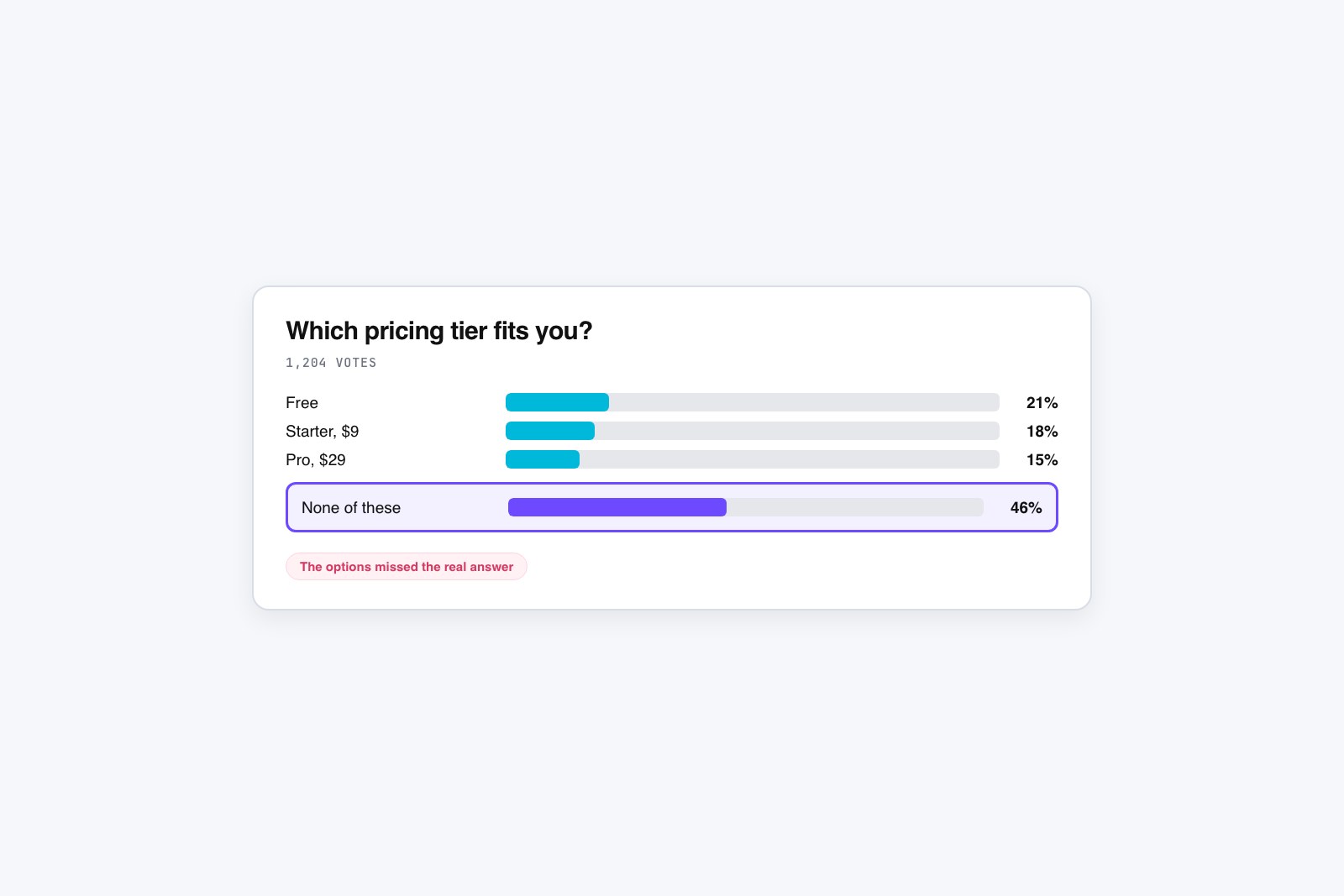
An escape option earns its place when your list might not cover everyone. A reader who doesn’t fit will otherwise either bail or pick the least-wrong answer and quietly poison your numbers. “None of these” or “Not sure” gives them an honest exit, and when that option starts winning, it’s the most useful result a poll can hand you: your choices missed the real answer. The cost is that a bare “Other” with no follow-up becomes a dumping ground. You learn that 18 percent picked it and nothing about what they meant. So add it when you’d rather know your list is incomplete than pretend it’s complete, and skip it when your options genuinely cover the field. A yes/no poll doesn’t need one.
A long list usually means the question is doing too much
If you keep reaching for more options, the question, not the option count, is the real problem. “What do you think of our site?” wants a dozen answers because it’s really five questions wearing one coat: design, speed, content, navigation, price. So split it. Ask “What should we improve first?” with four concrete choices, and if design turns out to matter, run a second poll on that later. One question, one decision, a handful of options. When you build one on GFX Poll Studio, you’ll see this in the layout itself: the options stack as a tight vertical list, and the moment it runs past a few, it stops reading like a quick question and starts reading like a form. That narrowing instinct, tighten the question and shorten the list, is the same discipline behind almost every choice you make when you create a poll for your website. Get the question small enough and the right number of answers tends to reveal itself: usually somewhere between two and five.