Website Poll Examples That Get More Responses
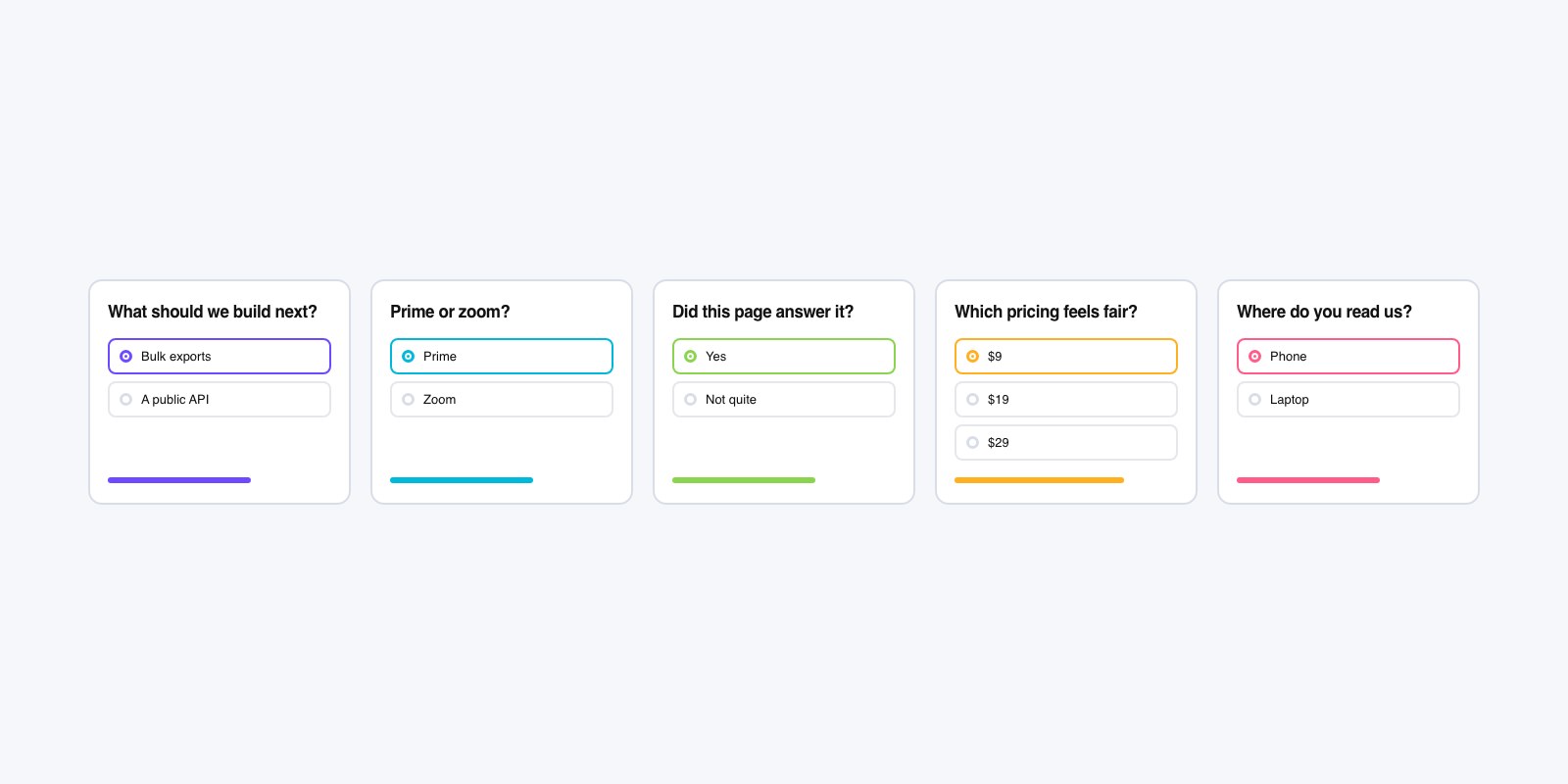
You can usually tell whether a website poll will work before a single vote comes in. The ones that pull hundreds of responses have almost nothing to do with the software behind them. They share four small habits: the question is specific, the options sound like something a real person would say, the poll sits where the reader just formed an opinion, and the result is something the reader actually wants to see. The fastest way to learn that isn’t a rulebook. It’s watching a handful of real polls and noticing what they have in common.
A recipe blog that asks right after the oven timer
A food blog runs a single poll, and it sits directly under the recipe card instead of off in the sidebar: “Did this one turn out for you?” with three options, “Nailed it,” “Close, but I had to tweak it,” and “It flopped on me.” The timing is ruthless, which is why it works. Someone meets that poll the moment they’ve either pulled a perfect loaf from the oven or scraped a sunken one into the bin, so the opinion is real and fresh and they have a reason to register it. Move that same poll to the sidebar and ask “How are we doing?” instead, and it collects four votes a month, because nobody browsing a homepage has just cooked anything. The options read like a friend talking, not a satisfaction survey. And the result is worth seeing for the next reader: anyone deciding whether to attempt a finicky custard wants to know if strangers hit the same wall. The blogger gets an early warning too, the first sign that a recipe’s instructions aren’t landing.
A SaaS changelog that turns a release note into a vote
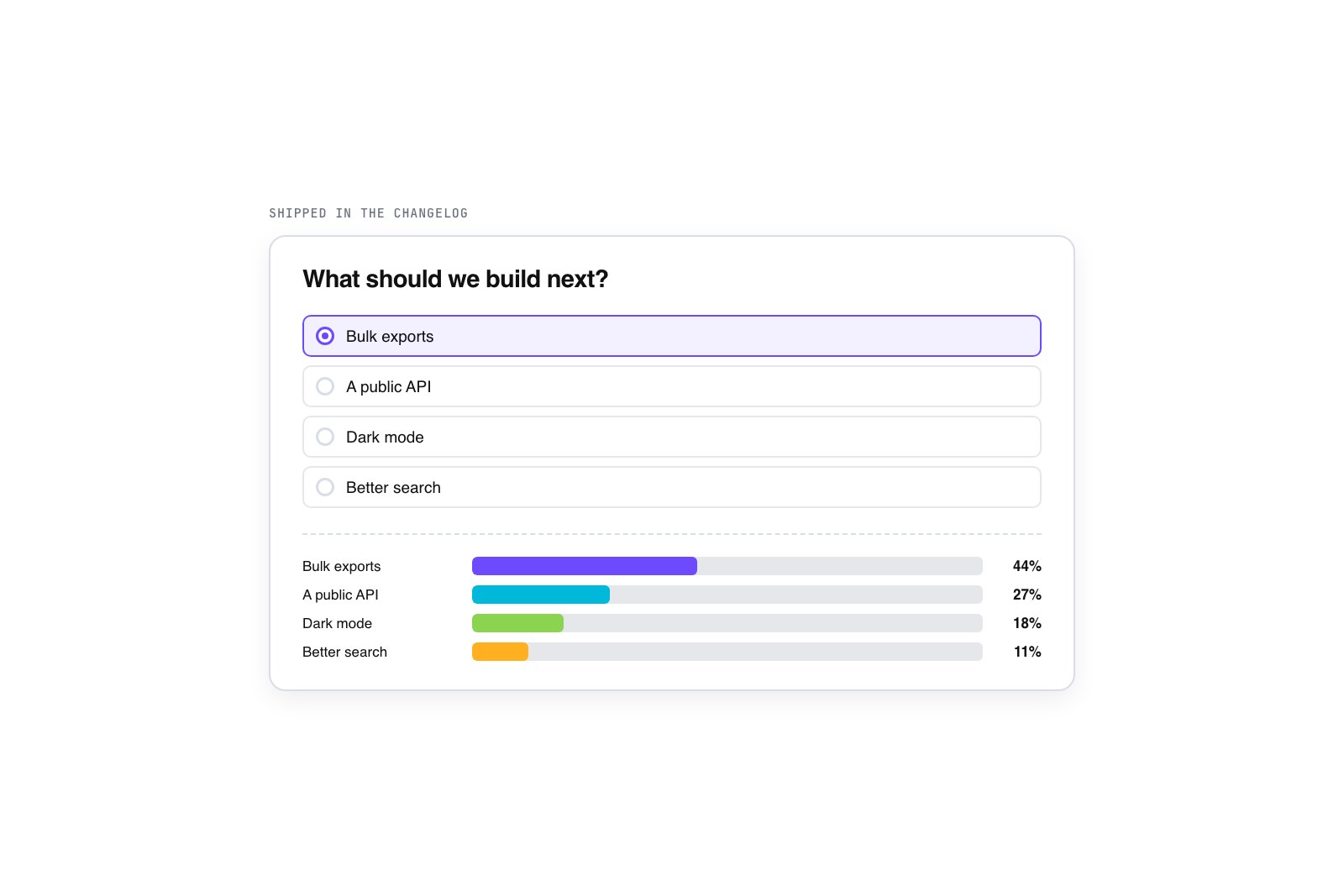
A small software team posts its changelog, and at the bottom of the “we shipped dark mode” note it drops a poll: “Nice. What should we build next?” The options are “Keyboard shortcuts,” “Bulk editing,” “A mobile app,” and “Something we haven’t listed.” This one earns answers because the reader is already a user who cares; they came to see what changed, and now they get a say in what comes after. Run the same question on a marketing page aimed at people who have never touched the product and it dies, because strangers don’t hold opinions about your bulk-editing feature. The choices are genuine roadmap candidates written in plain words, and that last “something we haven’t listed” line gives the person with a pet request an honest place to land instead of firing it into a support ticket. Showing the running tally right after a vote is the payoff: people like seeing whether the rest of the crowd wants the same thing they do. That reward loop is most of what good poll design best practices come down to, a reason to care and something in return for the click.
A local news site polling the argument everyone’s already having
A town paper covers a council meeting about an aging bridge and closes the article with a poll: “The Elm Street bridge is near the end of its life. Repair it or replace it?” Options: “Repair it,” “Replace it,” and “I need to read more first.” People in that town have been arguing about this bridge at the diner for a year, so the poll isn’t asking them to form an opinion, it’s handing them a button for one they already hold. That’s the move with any civic poll, find the thing readers are already worked up about and put the vote right where the argument is loudest. Bury it on a page about the town’s history and it flatlines. The result is the actual story here. A near-even split tells the reporter, and everyone reading, that the town is genuinely divided, which is more interesting than any tidy number. The “need to read more” option keeps the undecided from being shoved onto a side and bending the count.
A hobby forum poll that kicks off the thread
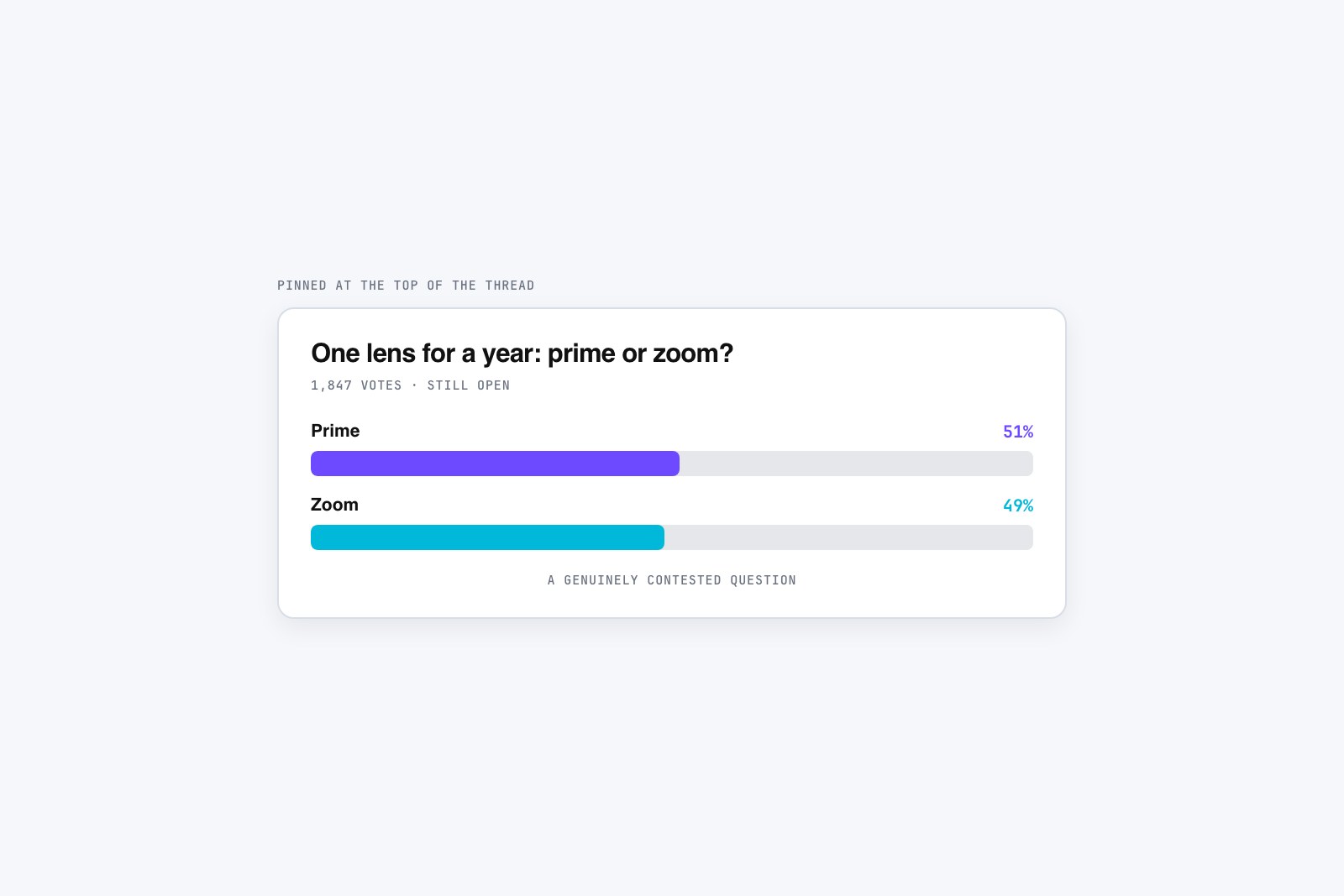
On a photography forum, a moderator pins a poll to the top of a discussion: “For street photography, what are you shooting these days, a prime or a zoom?” The options carry a little attitude, “A prime, one focal length keeps me honest,” “A zoom, I want the flexibility,” and “Depends on the day.” Hobbyists pile onto a question like this because it’s an identity question in disguise, and it’s fun to plant a flag. Options with personality, instead of dry categories, pull people in to vote and then explain themselves in the replies, which is the whole point on a forum: the poll is a starting gun, and the vote count climbing next to the reply count feeds both. If you ever want to stretch that instinct past one question into a whole sequence, that’s its own craft, designing a quiz people actually finish, but the same rule carries over, make every step something they enjoy answering.
An online store asking the question its shoppers are already asking
A shoe shop puts a small poll on each product page, right next to the size chart: “How did these fit you?” with “Runs small, I sized up,” “True to size,” and “Runs big, I sized down.” Watch who answers versus who reads. A buyer who just unboxed the shoes votes in two seconds because it’s easy and a little satisfying to weigh in. The next visitor, hovering over the buy button and stuck between a nine and a ten, wants that result more than anything else on the page. The store collects sizing data it will genuinely use, and it can build one like this in a minute on GFX Poll Studio and drop it beside the chart. Notice what every one of these polls has in common: the reader wanted the result as much as the person who made it. The recipe cook wants to know if others struggled, the software user wants to see if the crowd agrees, the townsperson wants to know how split things really are. When answering the poll and seeing the outcome are the same small reward, you stop having to beg for votes. A set of reader poll templates you can copy will hand you the shapes; that mutual curiosity is the part you can’t skip.