Social Media Poll Ideas That Are Worth Keeping
A poll in Instagram Stories is the easiest engagement you will ever get. Tap one of two options, watch the little bar fill, done. The catch is that once the story expires, so does everything it told you. The votes, the split, the people who cast them, all of it stays inside the app and vanishes in about a day. That is the real question behind a social poll. Not what to ask, but whether the answer is worth keeping, and where it should live once you have it.
Native polls buy reach and rent the data
Most social media poll ideas never leave the app they were born in. Every platform hands you a poll for free, and each one comes with the same quiet trade. A native poll rides inside the feed or the story, so it reaches people who would never click a link, and it costs them one tap. In return you keep almost nothing. An X poll gives you up to four options and runs for a week at most before it archives out of easy reach. An Instagram Stories poll is a two-choice sticker that is gone in 24 hours. A LinkedIn poll lingers longer in the feed, but you still cannot export the votes, embed the result anywhere, or follow up with the people who answered. The reach is real. The ownership is not.
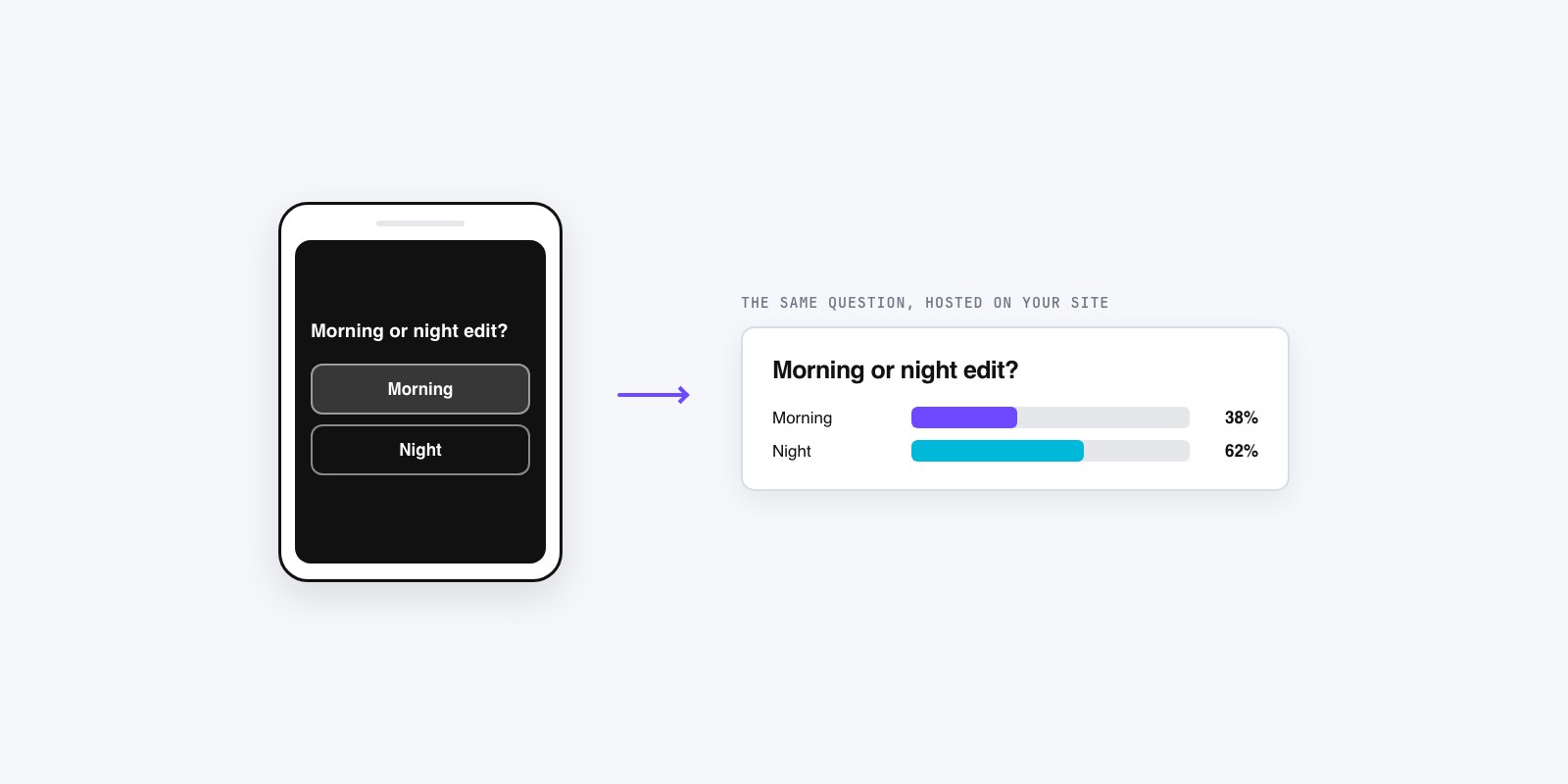
A poll you host somewhere you control flips that. Fewer people see it, because you are asking for a click, but the result is yours to read later, reuse, and put on a page. Neither one is the right answer by default. The choice depends on whether you want a quick temperature read or a result you can act on and keep.
What to ask on each platform
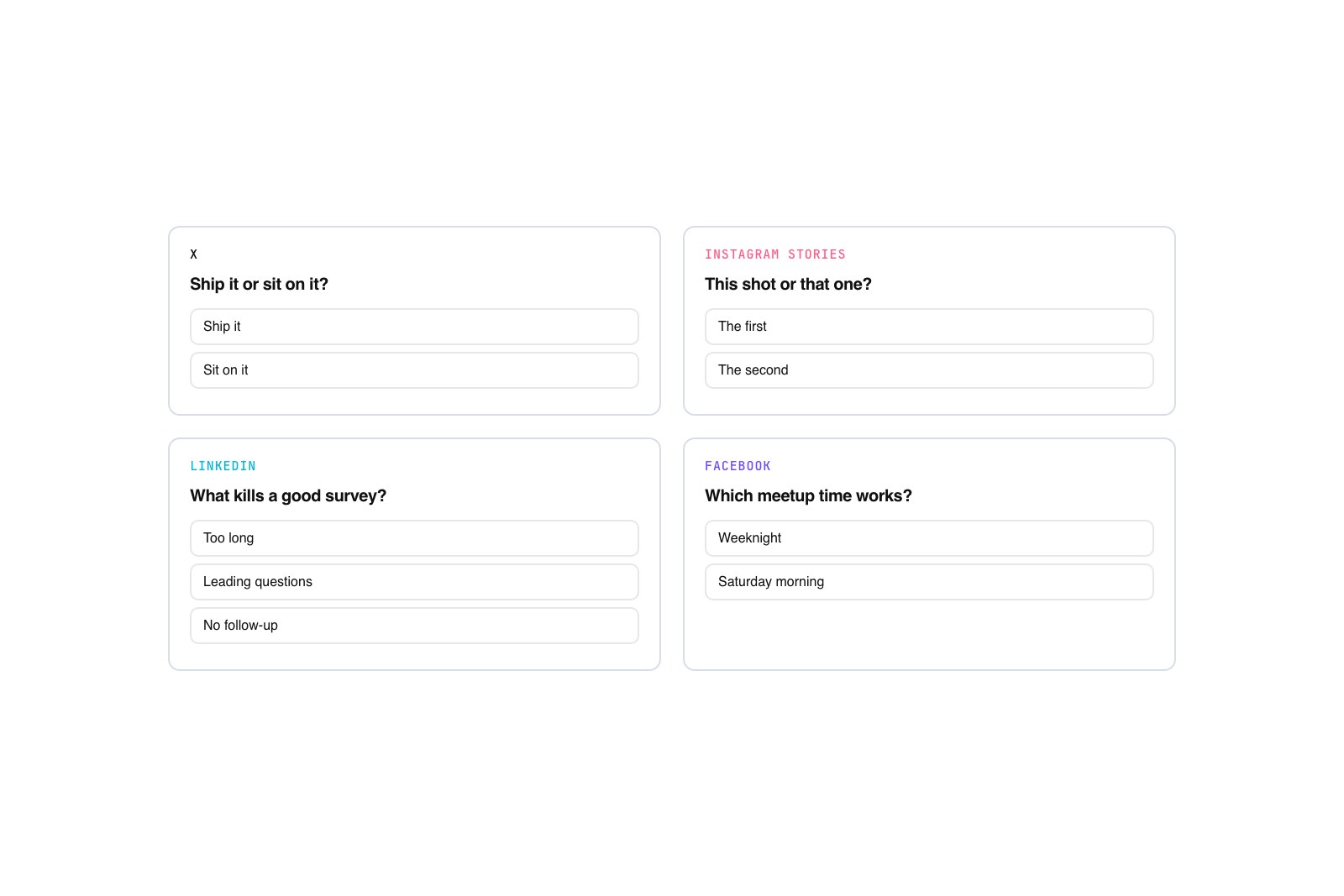
Match the question to how people behave in that spot. On X, twitter poll ideas that work are hot takes with four short options, the kind people quote-tweet to argue with. A dev tool can ask “Tabs or spaces, settle it.” A coffee roaster can ask “Cold brew, iced pour-over, or just black and hot?” The feed rewards opinion, so give people one.
Instagram poll ideas live or die on being visual and effortless. The two-option sticker over a photo is the whole format, so use it for a real preview: two label mockups with “Which one ships?”, or two dinner photos with “Tonight?” A slider poll (“How badly do you want the restock?”) reads as playful and still tells you something.
A LinkedIn poll is a different animal. People answer to signal who they are, so ask about their work and keep the options honest. “What kills your team’s focus most weeks? Meetings / Slack / context switching / hiring” gets answered because everyone recognizes their own week in it. Facebook polls do their best work inside groups, where you can ask the thing the group already argues about and let the comments carry it. Across all of them, the best social poll questions are short, specific, and easy to have an opinion about in two seconds.
When to send people to a poll you own instead
The moment a poll’s answer is going to change something you do, or feed something you publish, run it where the result survives. Post the teaser on social to pull attention, then link out to a poll you host. You can build the poll on GFX Poll Studio, keep the votes, and drop the finished result into a blog post or a landing page whenever you want. You will get fewer responses than a native sticker, because a click is a bigger ask than a tap. That is the price of keeping the data, and it is worth paying when the question actually matters. Social is one channel for a poll, not the only place it should live, and it helps to think about where polls belong across your whole site and treat each platform as a doorway to something you own.
Turn the votes into the next post
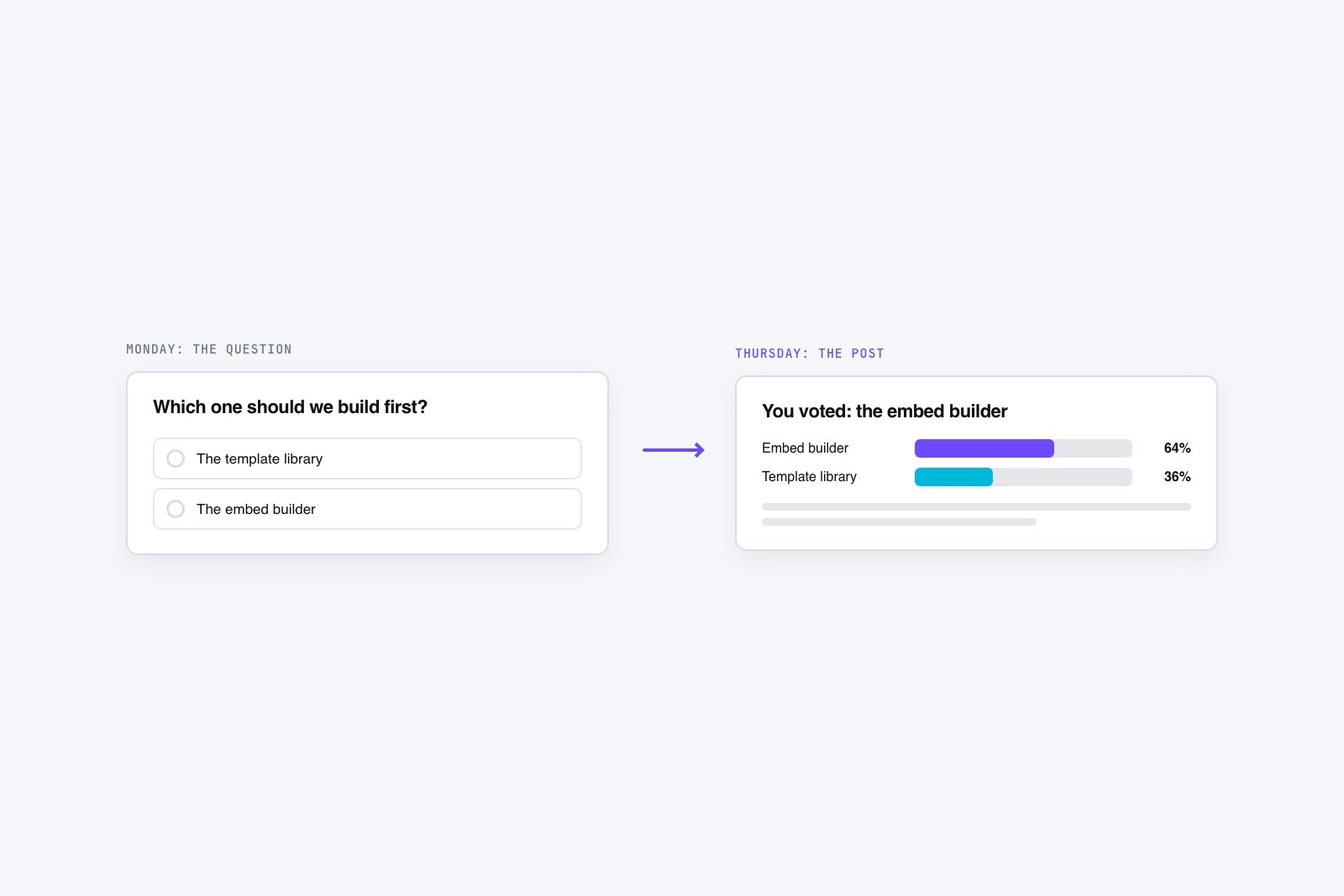
A poll is a two-part story, and most people only tell the first half. They ask the question, watch the votes come in, and then let it drop. The reveal is the free follow-up. “You voted: 68 percent said the redesign, so here is what we are changing” gives you a second post out of one poll, and it rewards everyone who answered by showing their vote meant something. This works anywhere a poll runs. The same move powers a good newsletter poll, where the results email is the reason people open the next one. On social, the result post often outperforms the poll itself, because now there is a verdict to react to.
A social audience is not a survey panel
One habit saves you from most bad calls here. The people who vote on your X or Instagram poll are your most engaged followers on a good day, not a fair sample of anyone. So read the result as a conversation, not a census. A near-even split is a genuine debate worth posting about. A landslide usually means the question was easy or the options were stacked. And a wave of joke votes, which social invites more than any other channel, is a sign the question was fun but not useful. Take the direction, skip the decimal points, and remember that the durable value was never the percentage. It was the reason to post again.